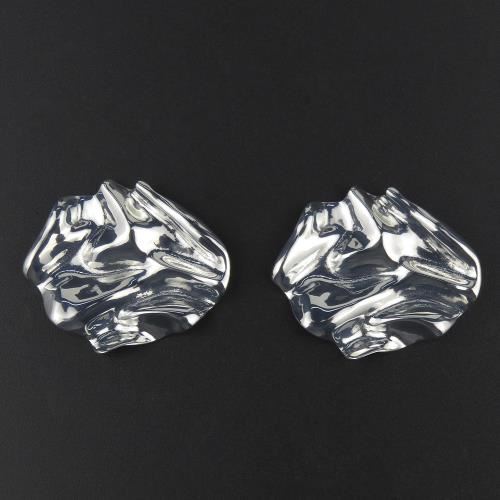
Hello, I’m Max, a technical engineer at JintaiJin. Today, I’m going to share a simple yet powerful solution for polishing aluminum alloy jewelry in bulk. Imagine spending hours polishing individual pieces by hand, trying to perfect every small detail, only to fall behind schedule. Now picture a fully automated machine doing the same task for you with greater speed, accuracy, and consistency. Our c...
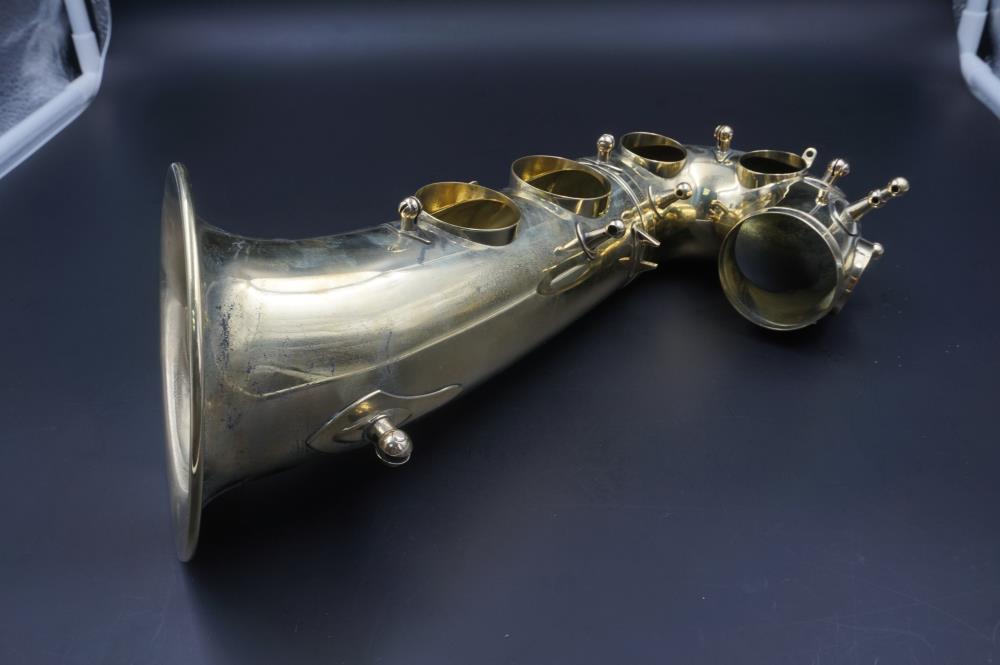
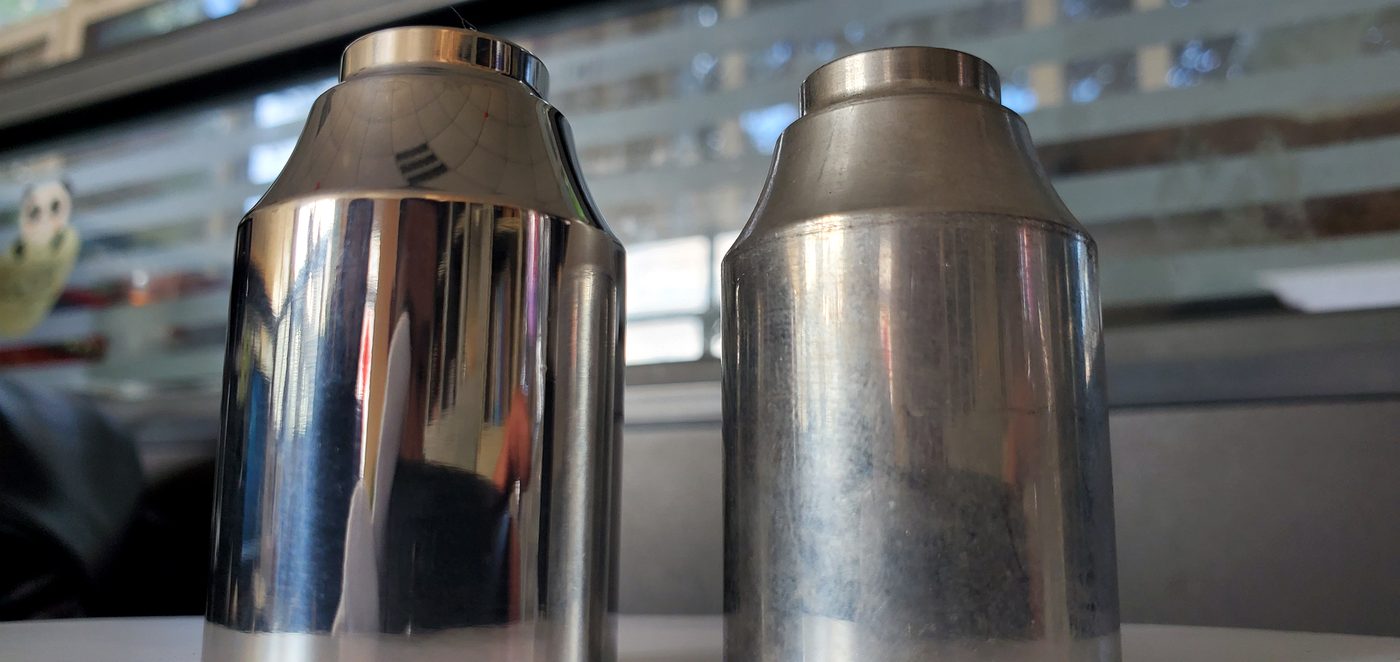
Technical Guide to Surface Rust Removal and Precision Polishing for Saxophones By Max, Technical Engineer at JintaiJin As a technical engineer at JintaiJin, I’d like to share insights into the meticulous process we use to restore saxophone components to a bright, refined finish. The saxophone, with its intricate arrangement of brass parts and precise structure, requires specific techniques for eff...
Eyewear Finishing Process Guide Acetate Eyeglass Frame Polishing: Dry vs Wet Tumbling Process Guide Dry and wet tumbling do different jobs in acetate frame production. The best route depends on the starting surface, required gloss, frame geometry, color, batch size, and acceptable edge change. This guide explains how to choose each stage without relying on a universal recipe. Cellulose acetate can...
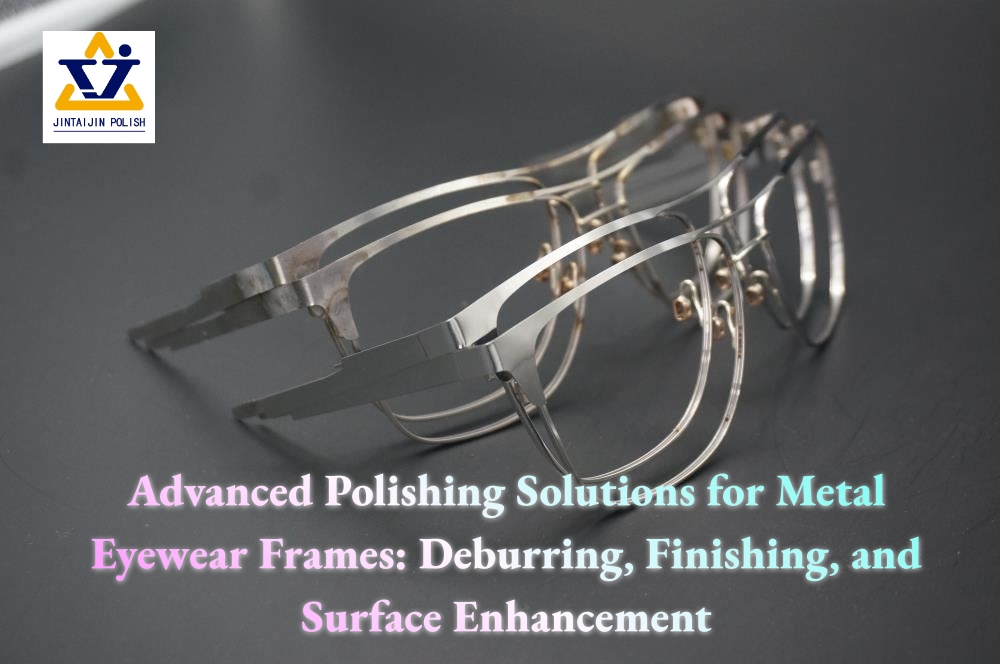
Introduction: The Precision Challenge in Metal Eyewear Manufacturing Metal eyewear frames demand flawless surfaces, intricate detailing, and long-lasting aesthetics. However, achieving mirror-like finishes while maintaining structural integrity requires overcoming challenges like micro-burrs, uneven textures, and post-processing contamination. Traditional methods often fall short in consistency, e...
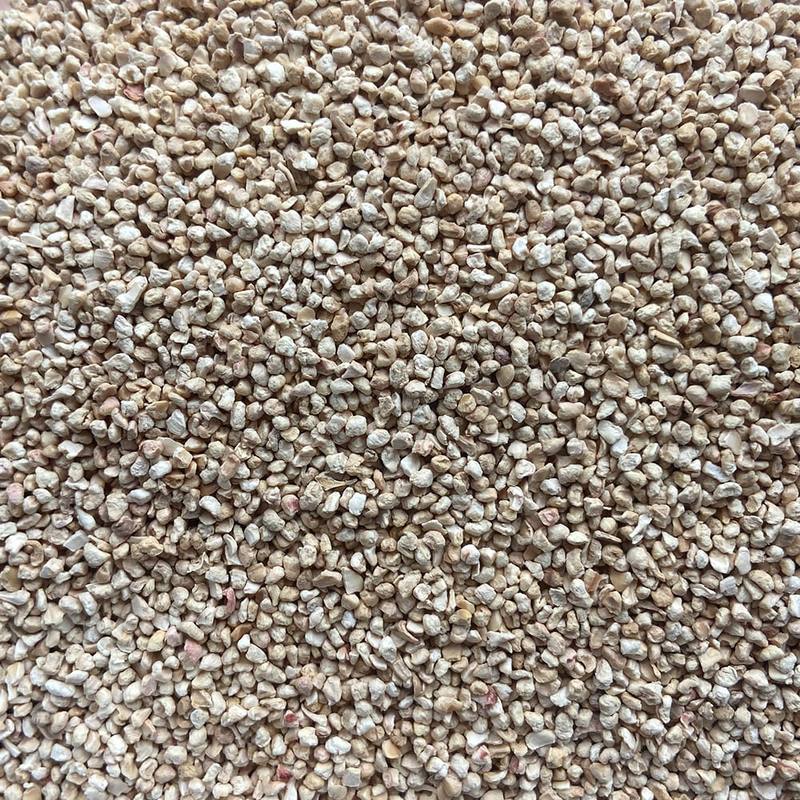
Dry Finishing Process Guide Walnut Shell Tumbling for Wood Parts: Dry Polishing Process Guide Walnut shell media can clean, smooth, and brighten selected small wood parts in a rotary barrel without introducing water. It is a finishing and process-control tool, not a substitute for correcting deep machining marks, heavy tear-out, unstable moisture, or poor sanding. Buyers searching for a wood polis...
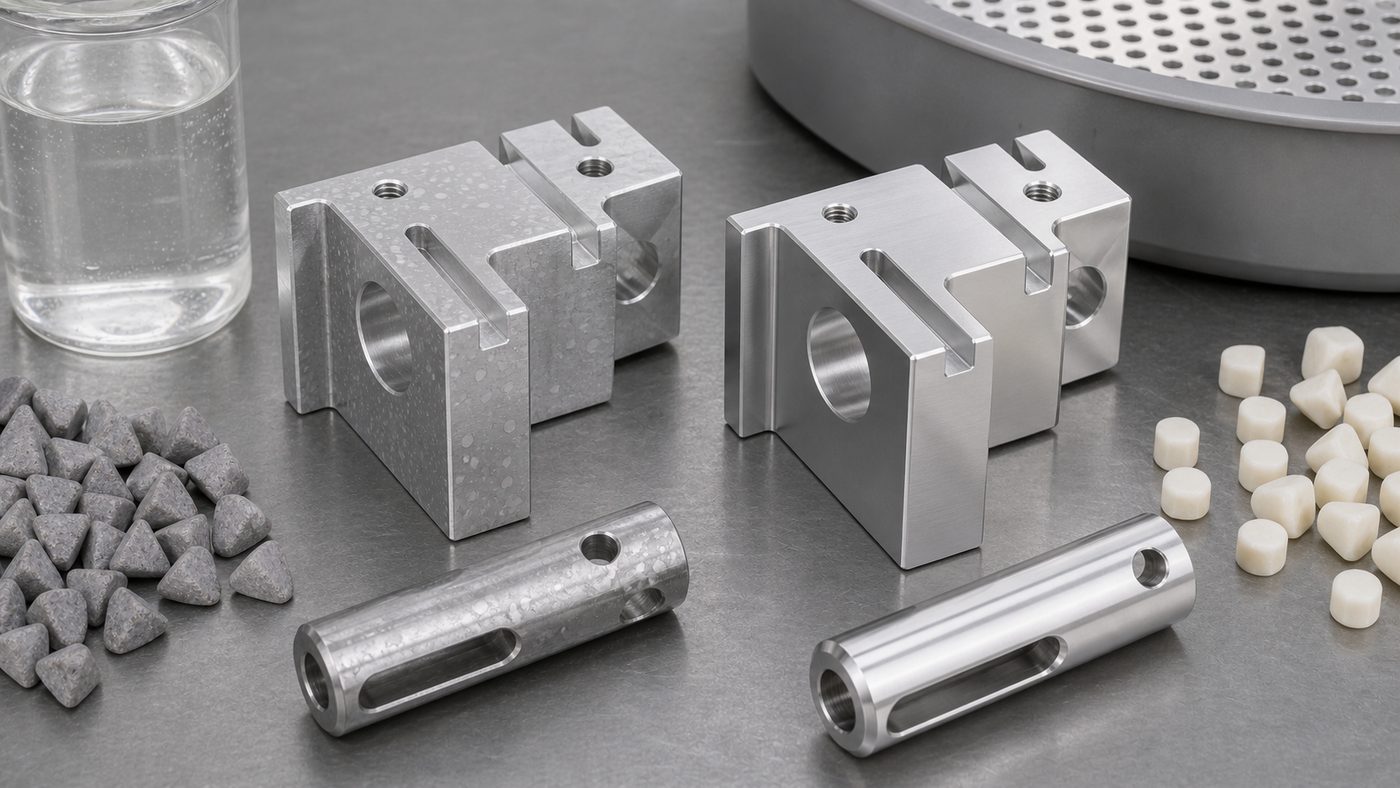
Ceramic Media vs Plastic Media: How to Choose the Right Tumbling Media Choosing between ceramic media and plastic media is one of the most important decisions in a mass finishing process. The right media can remove burrs, smooth edges, improve surface consistency, and reduce manual work. The wrong media can damage parts, leave poor finishes, lodge in holes, or make cycle time unnecessarily long. T...
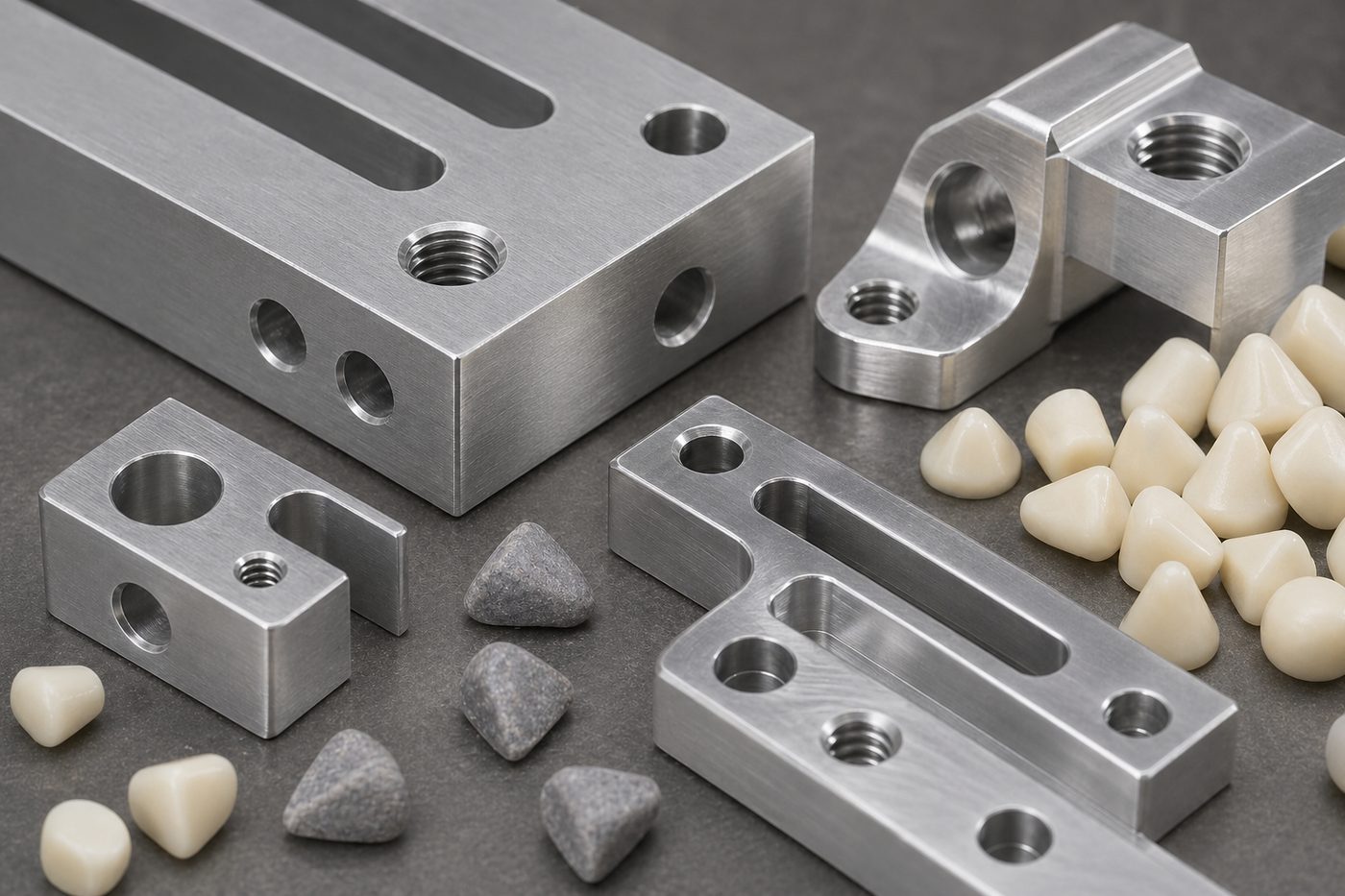
How to Remove Burrs from CNC Aluminum Parts Without Edge Damage CNC aluminum parts often need deburring after milling, drilling, tapping, or slotting. The challenge is not only removing burrs, but removing them without rounding critical edges, denting visible surfaces, damaging threads, or changing precision dimensions. A stable deburring process should protect the part while still producing clean...



 IPv6 network supported


 +86-592-2381506