Dry Finishing Process Guide
Walnut Shell Tumbling for Wood Parts: Dry Polishing Process Guide
Walnut shell media can clean, smooth, and brighten selected small wood parts in a rotary barrel without introducing water. It is a finishing and process-control tool, not a substitute for correcting deep machining marks, heavy tear-out, unstable moisture, or poor sanding.
Buyers searching for a wood polishing machine often need more than a machine name. They need to know whether the parts can tumble without bruising, whether walnut shell can reach the target surfaces, how the media will be separated, and what inspection will confirm that the wood still meets its dimensional and appearance requirements. The answer depends on the wood species, moisture condition, part geometry, starting defect, target finish, batch size, and allowable edge change.
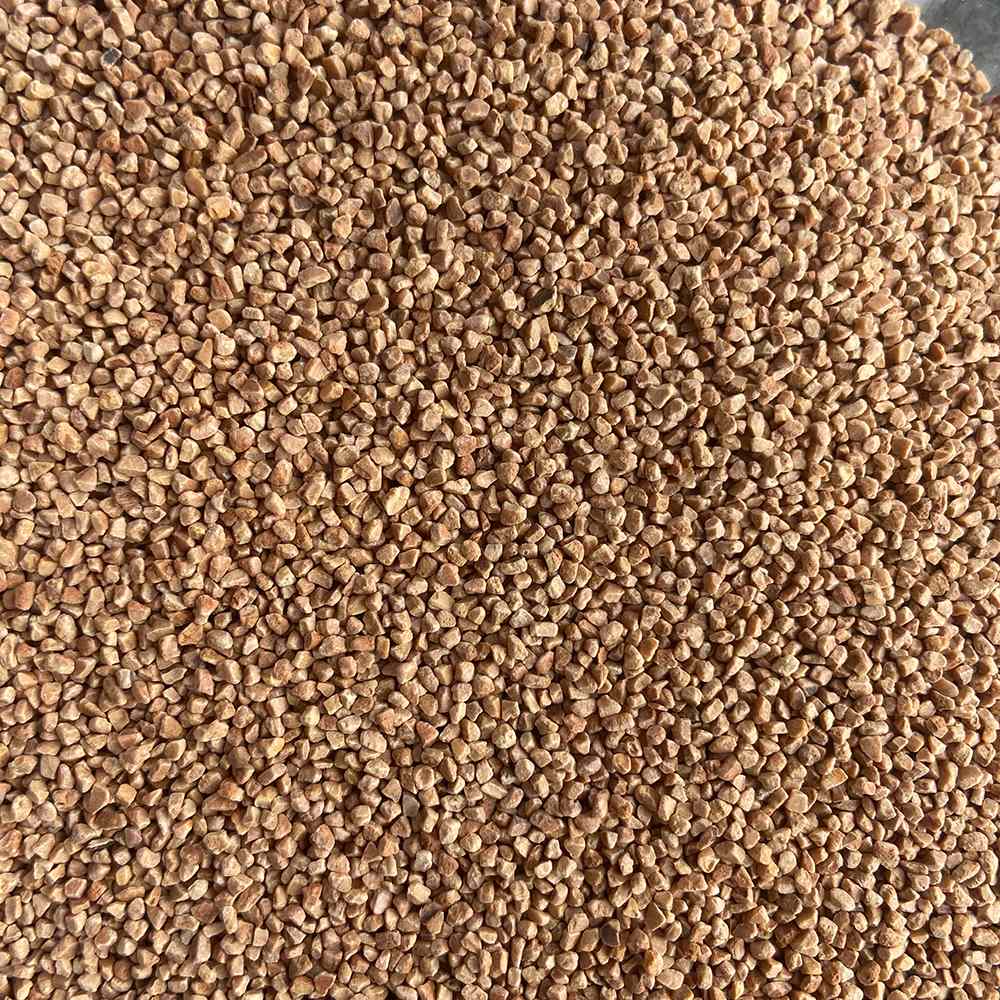
What walnut shell media can and cannot do
Walnut shell is an organic dry finishing media. In a rotary barrel, the media and parts move through a rolling mass. Contact can remove loose dust, distribute a compatible polishing charge, soften minor surface irregularities, and produce a more consistent tactile or cosmetic finish. The result is governed by contact, sliding, impact, and the condition of both the parts and media.
It should not be expected to erase deep saw marks, repair chipped grain, flatten warped parts, remove large amounts of material, or guarantee a particular gloss. If parts enter the barrel with inconsistent sanding, moisture, geometry, or contamination, the finished batch may remain inconsistent. A stable upstream process is therefore the first requirement.
| Starting condition | Walnut shell tumbling role | Main risk to validate |
|---|---|---|
| Uniformly sanded small parts | Dry cleaning and light finish refinement | Edge change and part-to-part marks |
| Laser-cut parts with light residue | Remove loose residue and prepare for inspection | Dark residue transfer and uneven recess cleaning |
| Parts needing oil, wax, or coating | Final dry preparation after a validated cleaning sequence | Media dust or compound affecting adhesion |
| Deep tool marks or torn grain | Usually not the primary correction step | Long cycles bruise parts before defects disappear |
| Thin, fragile, hooked, or interlocking parts | Only after a controlled handling trial | Breakage, tangling, dents, and nesting |
Which wood parts are suitable?
Good candidates are repeatable small parts that can roll through the media without locking together. Examples may include beads, handles, knobs, ornaments, small blocks, and selected turned or carved components. Suitability must be confirmed with the actual wood, because density, grain direction, moisture, coatings, inserts, and thin features change the way a part responds.
Pay particular attention to cross-grain corners, drilled holes, narrow slots, fragile projections, sharp decorative details, glued joints, and metal inserts. These features may trap media, collect dust, or receive more impact than broad surfaces. Mixed part families should not share a trial unless their geometry and acceptance criteria are genuinely comparable.
Why a rotary barrel is the normal starting point
A rotary barrel tumbling machine creates a rolling cascade. For dry wood finishing, the objective is steady circulation with enough relative movement to contact the surfaces but without uncontrolled dropping or repeated hard collisions. The barrel must have sufficient working volume for media and parts to move as a mass.
Machine capacity cannot be selected from part weight alone. A buyer should provide the largest part dimensions, geometry, bulk volume, batch quantity, wood condition, and target result. A light but bulky wood part may consume more working volume than its weight suggests. Compare available machines such as the 600 L wood barrel dry polishing machine only after confirming the usable batch volume and movement.
A vibratory machine may be evaluated when the part geometry or process needs a different motion, but it is not automatically gentler. Bowl or tub selection, load, media ratio, amplitude, part contact, and separation still require testing. The bowl, tub, and capacity guide explains the general equipment decision framework.
How to choose and control walnut shell media
Media grade and particle size affect surface contact, access to details, separation, dust, and the chance of lodging in holes. Smaller particles may reach tighter features but can be harder to separate. Coarser particles may separate more easily but can bridge across recesses or leave narrow areas less processed. The chosen grade must be compared with every hole, slot, recess, and internal feature on the part.
Use clean, dry walnut shell polishing media. Keep unused media protected from moisture and contamination. During production, monitor dust, color, odor, flow, embedded residue, and changes in particle size. Media that carries contamination from a previous batch can transfer it to the next batch, so separate media by process when cross-contamination matters.
If a polishing compound or charge is used, confirm that it is compatible with the wood and the next operation. Excess charge can create deposits, uneven color, sticky media, or cleaning work. Begin with an uncharged reference trial, then change one factor at a time.
A safer process-development sequence
- Define the incoming condition. Record wood species, moisture condition, dimensions, sanding state, defects, coatings, glue, and inserts.
- Define acceptance. Use approved samples and checks for appearance, feel, dimensions, edge condition, cleanliness, and coating compatibility.
- Choose media around geometry. Confirm access and separation at holes, slots, recesses, and fragile details.
- Start with a small representative load. Use enough media to separate parts and create stable flow.
- Observe movement. The load should roll consistently rather than slide as one block, jam, or fall in an uncontrolled way.
- Inspect at short intervals. Stop when the target is reached, before extra time adds bruising, edge loss, or dust.
- Repeat the approved trial. A recipe is ready for scale-up only after it produces repeatable results on representative batches.
Troubleshooting walnut shell tumbling
| Symptom | What to check first | Possible adjustment to test |
|---|---|---|
| Dents or bruised edges | Part concentration, falling action, fragile geometry | Increase cushioning, reduce part load, shorten the trial, or change equipment |
| Uneven finish | Incoming sanding, blocked flow, mixed part sizes | Standardize incoming parts and restore consistent circulation |
| Dust or residue remains | Media condition, excessive charge, separation method | Refresh media, reduce charge, and improve extraction or post-cleaning |
| Media lodged in holes | Particle size versus smallest opening | Change grade or redesign the separation and inspection step |
| Little visible change | Defect depth, media contact, movement, target definition | Correct the upstream defect or test a more suitable process |
For systematic diagnosis of flow, scratches, residue, and inconsistent batches, use the mass finishing troubleshooting guide. The principles of controlling contact, media condition, and one variable at a time also apply to dry barrel trials.
What to send for machine and process selection
For a useful recommendation, send the wood species, moisture condition, part dimensions and bulk volume, geometry, current sanding or machining process, starting defect, target appearance, batch quantity, downstream coating, and clear photos or drawings. State whether holes, slots, fragile features, glued joints, or inserts must be protected. This information is more useful than asking for a generic cycle time.
Need a dry finishing trial for your wood parts?
Send representative parts, drawings, batch volume, current defects, and the required finish. We can use that information to define a test matrix and recommend a suitable barrel and walnut shell media grade.
Discuss Your PartsRelated manufacturing reference: jingseyewear documents another small-part finishing context where material behavior, geometry, and surface acceptance must be validated before production.
 +86-592-2381506


 IPv6 network supported