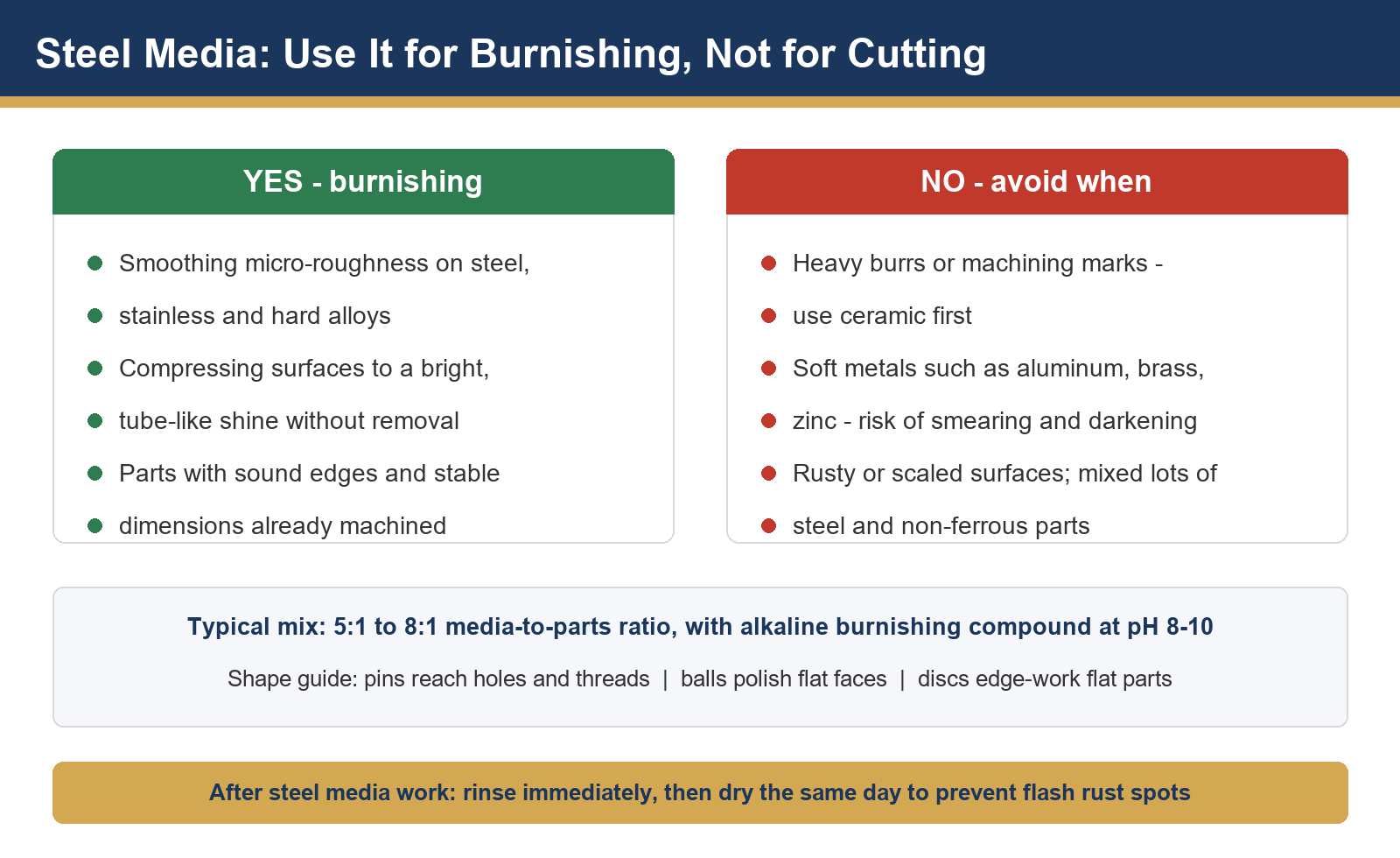
Steel Media Burnishing Guide: How It Creates Mirror Shine and When Not to Use It Steel finishing media • Pins, balls & discs • Burnishing process, compound pairing and limits Steel media is unique in mass finishing: it is the only media that polishes almost entirely without cutting. Hardened stainless pins, balls, and discs rub against parts under compound pressure, compressing micro-peaks int...
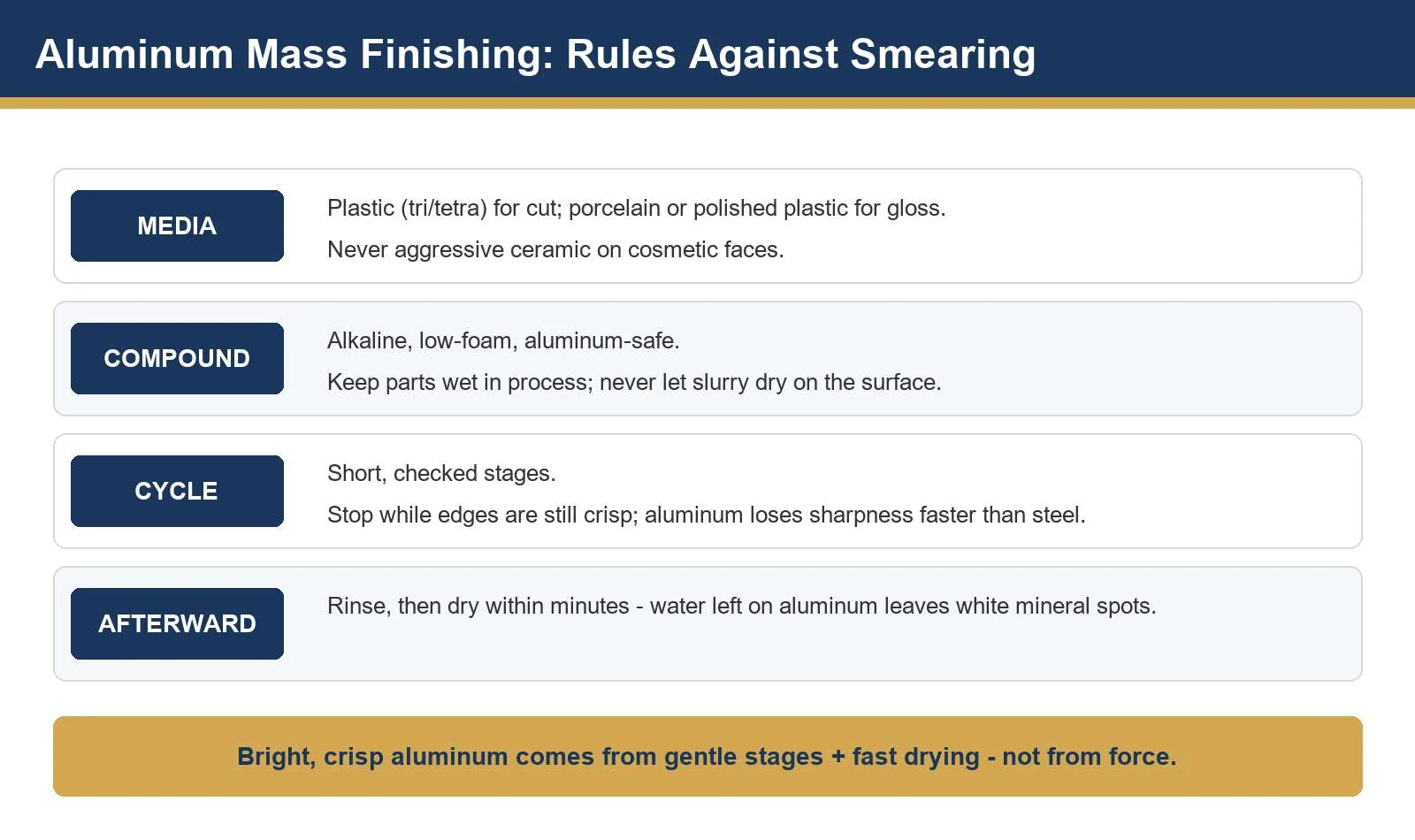
Mass Finishing Aluminum Parts: Deburr, Smooth and Brighten Without Smearing Aluminum surface finishing • Media, compound and cycle selection • From CNC parts to cosmetic components Aluminum is one of the most rewarding — and least forgiving — metals to mass finish. It deburrs fast, smooths beautifully, and polishes to an attractive satin-bright look. But it also smears under aggressive media, stai...
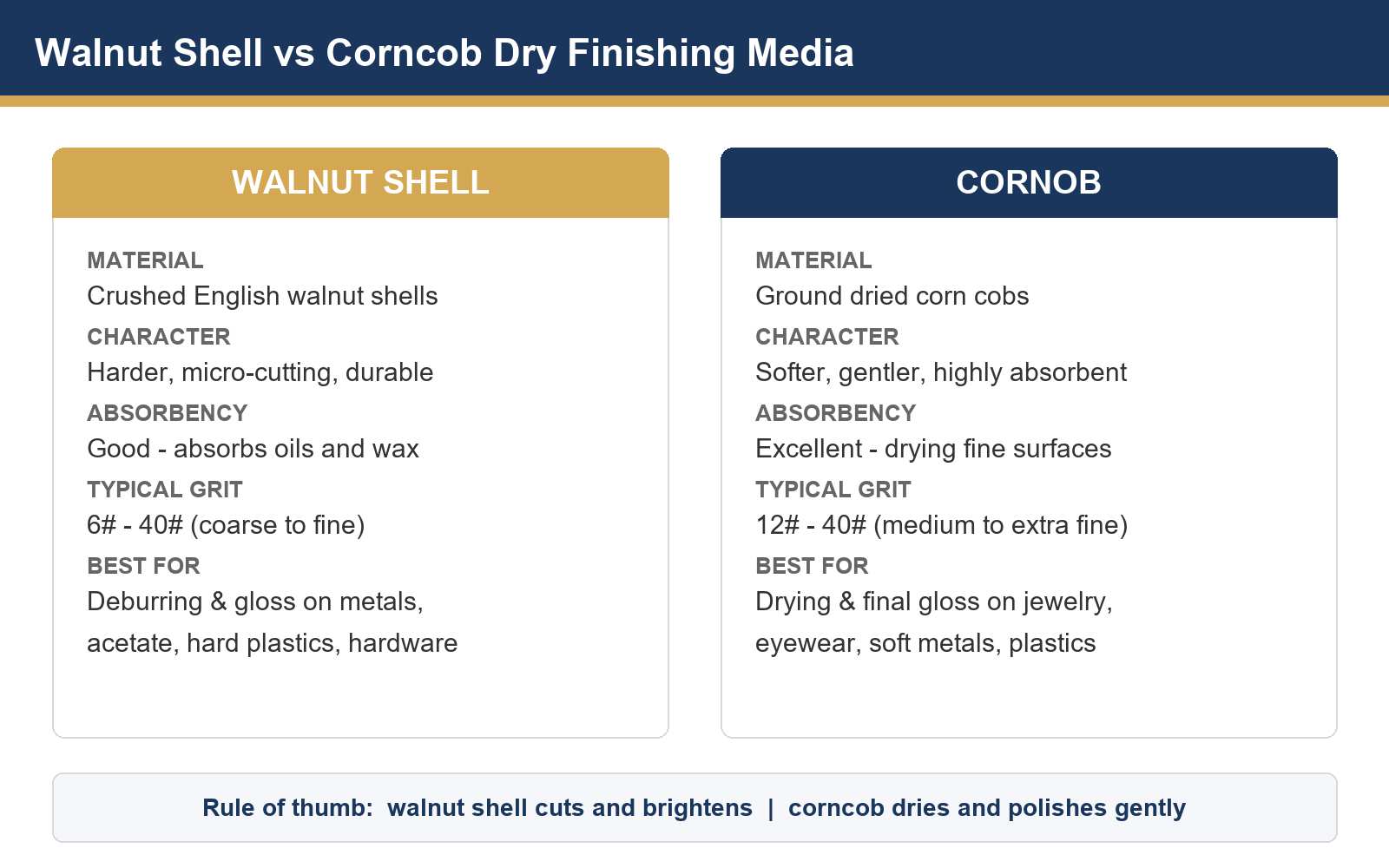
Walnut Shell vs Corncob: How to Choose Dry Tumbling Media for Eyewear, Jewelry & Hardware Dry finishing media selection guide • Walnut shell & corncob • For dry tumbling, vibratory and centrifugal lines Dry organic media — crushed walnut shell and ground corncob — is the workhorse of dry tumbling and dry vibratory finishing. The two materials look similar in the bag, but they behave very d...
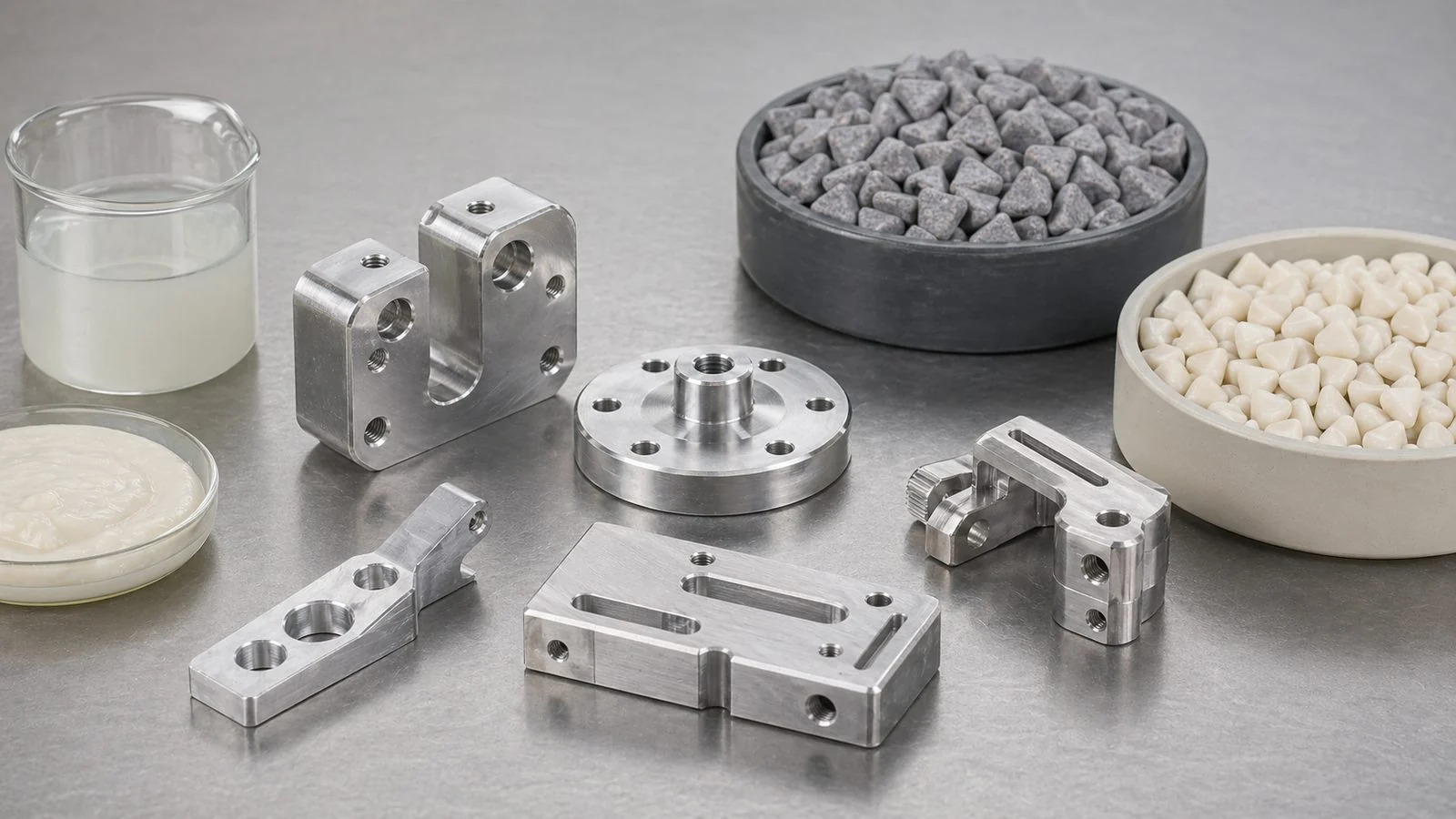
Ceramic vs Plastic Tumbling Media for Aluminum, Brass and Steel Parts Cover design direction: show the decision, not a generic machine hero. Add English labels “CERAMIC MEDIA” and “PLASTIC MEDIA” only if the cover is redesigned. How to Choose Ceramic vs Plastic Media for Aluminum, Brass and Steel Parts Short answer: choose ceramic media when controlled cutting, burr removal or edge radiusing is th...
Production Separation Guide How to Separate Small Parts from Tumbling Media: Screens, Size Control, and Process Design A finishing cycle is not production-ready until parts can be separated from media repeatedly. This guide explains how part geometry, media wear, screen design, orientation, and external separation methods affect labor, carryover, and the risk of trapped media. Part-media separatio...
Equipment Selection Guide How to Choose the Right Tumbling Media for Metal Deburring Selecting the right equipment for your production requirements involves more than matching mach
Process Troubleshooting How to Prevent Media Lodging in Holes Slots and Threads Surface finishing defects are often caused by interactions between multiple process variables rather
CNC Aluminum Deburring Guide How to Remove Burrs from CNC Aluminum Parts Without Edge Damage A controlled mass-finishing process can remove light machining burrs,soften tool marks
Media Selection Guide Wet Tumbling vs Dry Tumbling Process Media and Surface Results Compared When manufacturers face surface finishing challenges,the root cause is often not what
We use essential storage to keep this site working. With your permission, Google Analytics 4 helps us understand visits and improve the site. Advertising storage, ad user data, and ad personalization always stay off.




 IPv6 network supported


 +86-592-2381506