


How Acetate Eyewear Frames Are Mass Finished: From Tumbled Matte to Mirror Gloss
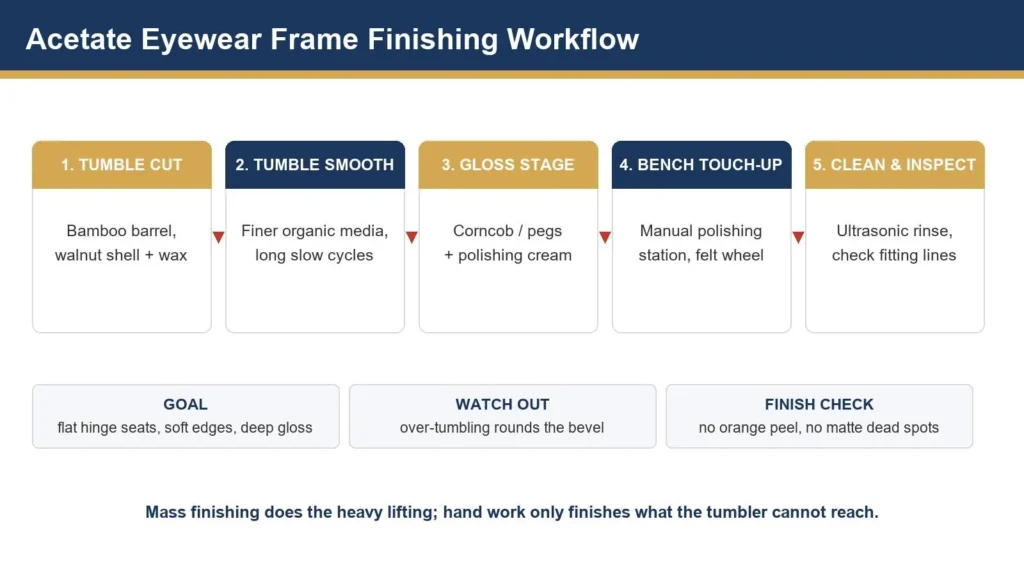
Acetate frame polishing workflow • Barrel tumbling + bench touch-up • A repeatable process for eyewear production
Freshly milled acetate frames come off the CNC looking chalky, with tool marks along the bevels and matte hinge seats. Turning them into the deep, wet-look gloss that defines premium eyewear is a staged process — and the heavy lifting belongs to mass finishing, not hand polishing. Here is the workflow eyewear factories use to finish hundreds of frames per batch with consistent results.
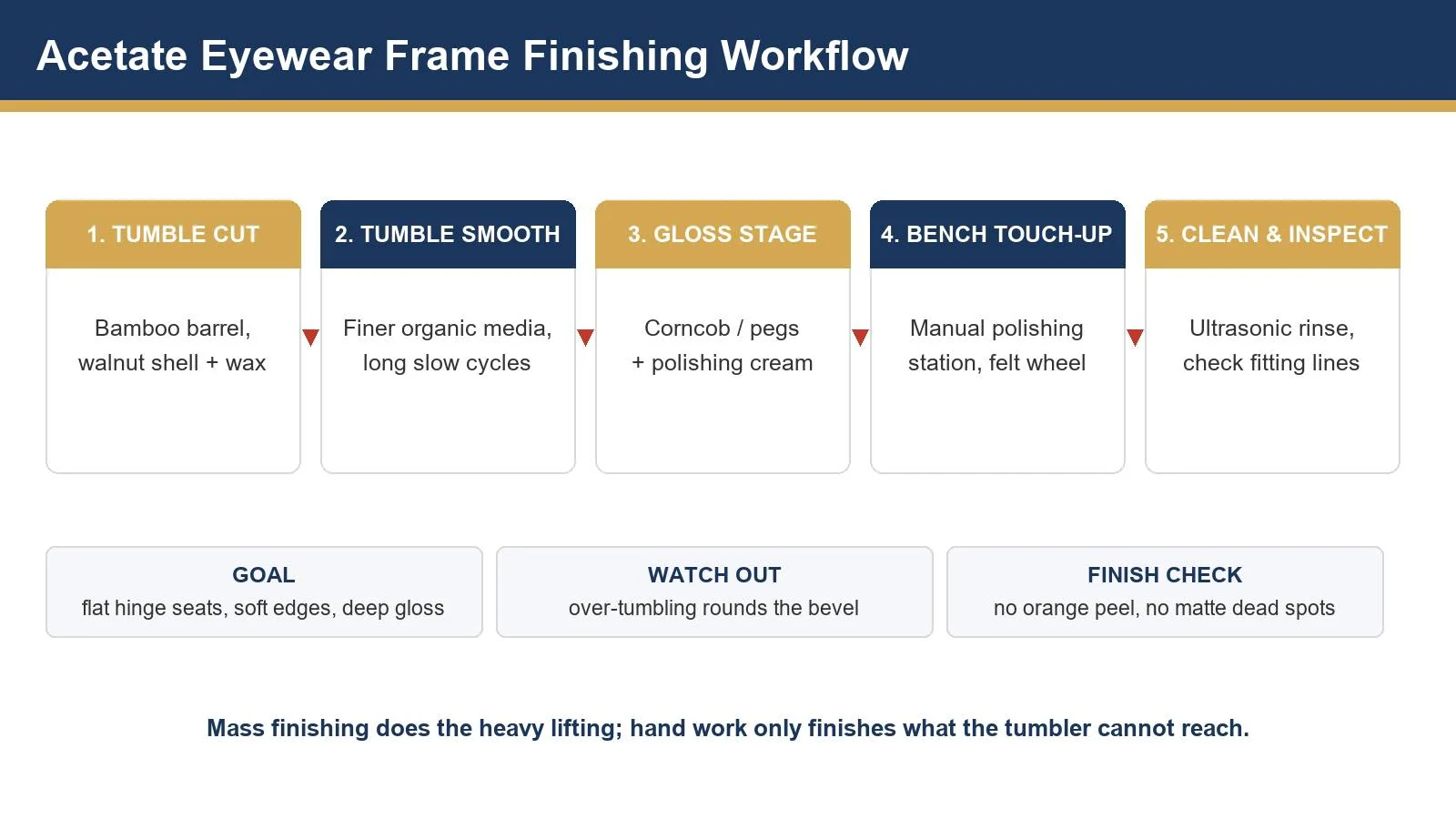
Why mass finishing first? A tumbler treats every frame identically — including bridge undersides and temple curls that fingers and buffing wheels reach poorly. Hand work then finishes only what remains, cutting labor time dramatically per batch.
1. Start Point: What a Milled Frame Looks Like
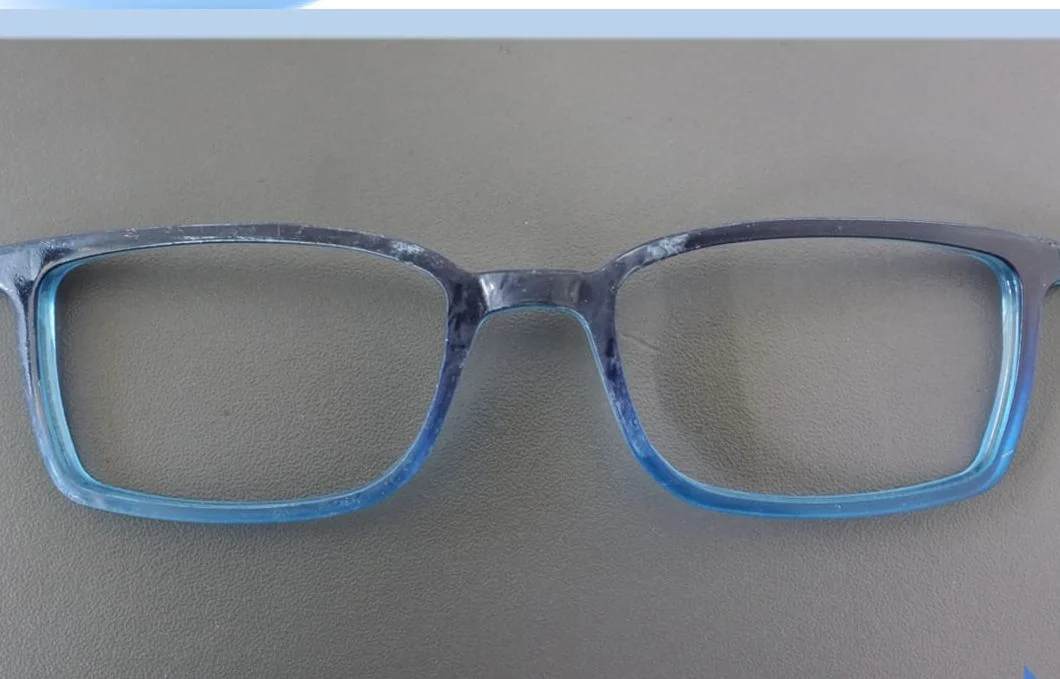
Cutter marks, light stress whitening around routed grooves, and an overall milky haze are normal at this stage. The goal of the following stages is to remove these without changing the frame’s geometry — the bevel angle and lens-seat fit must survive the process.
2. Stage 1–2: Tumble Cutting Then Smoothing
Frames go into a rotary barrel or vibratory bowl filled with organic dry media. The first stage uses coarser walnut shell with a cutting wax to knock down tool marks; the second stage steps down to finer media for uniform smoothing. Long, slow cycles are the norm — acetate responds gradually, and rushing shows up as shiny flat spots on curved surfaces.
- Media: graded walnut shell first, then corncob or wooden pegs — see our walnut shell vs corncob guide.
- Machines: octagonal bamboo barrels give gentle cascading action — described in detail in our bamboo tumbling machine SOP.
- Checkpoints: hinge seats flat, tool marks gone, no whitening left in routed channels.
3. Stage 3: The Gloss Stage
Fine corncob or wood pegs charged with polishing cream build the final luster. Compound is dosed little-and-often; overloaded media pastes acetate surfaces and dulls them. Filler-loaded bar compounds made for plastics work best — browse matching products in our finishing compounds range.
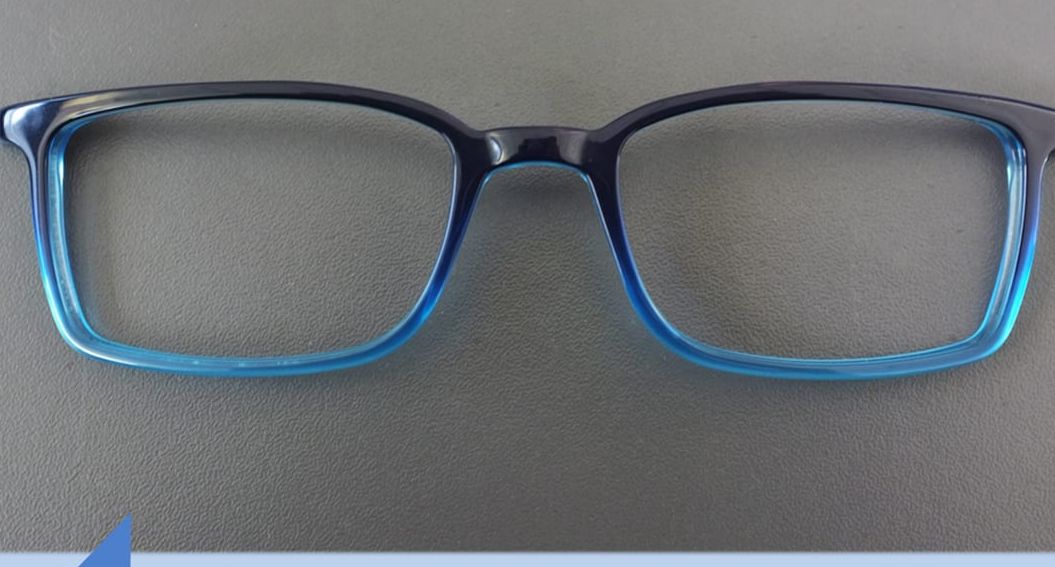
4. The Visible Difference
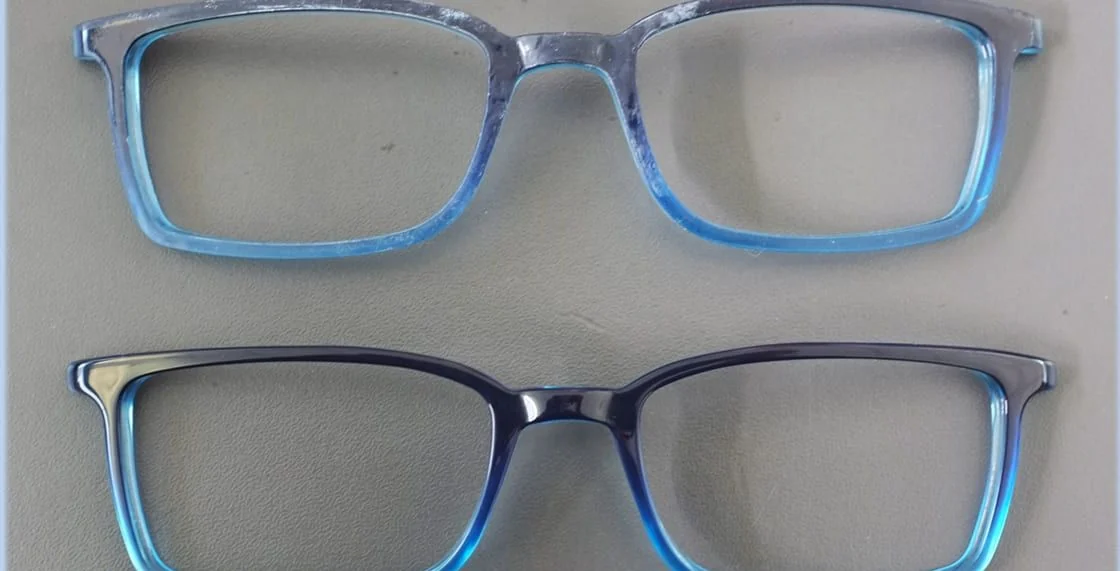
5. Stage 4: Bench Touch-Up
A single-station manual polishing bench handles what the tumbler cannot: tight fillets at hinges, lens-seat lines, and final edge refinement. Felt and muslin wheels with fine plastic-polishing waxes bring these zones up to the same gloss level as the tumbled surfaces — our single-station polishing machine guide covers the wheel, compound, and speed choices in detail.
6. Stage 5: Cleaning, Inspection and Common Pitfalls
- Clean: ultrasonic rinse removes wax residue from channels and engravings.
- Inspect: under diffused light, look for orange-peel texture, matte dead spots, or rounded bevels.
- Pitfall 1 — over-tumbling: cycles far beyond the recipe round the bevel and soften the front profile. Track cumulative hours.
- Pitfall 2 — dirty media: spent walnut loaded with acetate dust stops cutting and starts coating; refresh media per schedule.
- Pitfall 3 — skipping grit logic: jumping straight to the gloss stage polishes over tool marks instead of removing them.
Frequently asked questions
How long does acetate eyewear take to mass finish?
It is a multi-stage process measured in hours, not minutes. Frame components are tumbled through progressively finer stages, and the final gloss stage alone can run for a long period before the frame reaches a mirror finish. Any short cycle that claims a mirror finish is skipping a stage, which shows up as haze or visible marks.
Why does an acetate frame need several polishing stages?
Because each stage removes the marks left by the previous one. A frame coming off a CNC machine has machining marks; a single polishing pass cannot remove those and create gloss at the same time. The sequence has to step down through finer media until the remaining marks are below the level the eye can see.
Can mass finishing replace hand polishing on acetate frames?
Not entirely. Mass finishing builds the base gloss across all surfaces at once, but the final appearance on a premium frame usually involves a bench touch-up for edges, hinges and small areas the barrel cannot reach. Treat the two as a sequence rather than alternatives.
What causes a frame to come out matte instead of glossy?
Either the sequence stopped at too coarse a stage or the polishing stage was too short. Acetate is transparent and soft, so any remaining surface texture scatters light and reads as matte. Adding more time to the same coarse stage does not fix it; the stage has to get finer.
How do I protect thin temples and rims during tumbling?
By controlling the load and the media support. Acetate is heat sensitive and thin sections deform under load, so a charge that lets components press against each other will bend temples even without a heat problem. Media that supports the component rather than striking it is what keeps the geometry.
What should be checked on the first frames out of a cycle?
Clarity under raking light, edge condition, dimensional change on hinge areas, and any heat-related cloudiness. Check a frame from different positions in the load, because the working conditions are not identical across the barrel.
7. Build Your Own Recipe
Start from published recipes, then tune by sample runs: keep one marked control frame per batch and record cycle hours per stage. For machine options, compare our rotary barrel tumbling machines, and source consumables from our dry finishing media catalog.
Setting up or upgrading your frame finishing line?
Send frame samples and your target finish. We will return a tested stage-by-stage recipe with machines, media, and cycle hours.
Contact Our Finishing TeamOfficial website: www.surface-polish.com | Support email: info@surface-polish.com
 +86-592-2381506


 IPv6 network supported
