Vibration finishing equipment and barrel equipment for the foundry industry: complete solution from one mold Vibration finishing equipment and barrel equipment are used in the foundry industry to polish and finish cast parts. Vibration finishing uses high frequency vibration to smooth and polish the surface of a cast part, while barrel equipment uses a tumbling action to finish and deburr the edge...
Introduction: Surface polishing of copper products is a common process that effectively enhances the appearance and texture of copper items. Utilizing methods such as dry vibratory polishing, wet vibratory polishing machines, or vibratory bowl polishing, we can achieve a smooth and glossy finish. This article will discuss the benefits of polishing, the differences between these methods, and their ...
When it comes to enhancing the beauty and durability of 304 stainless steel products, polishing stands out as a vital process. In this article, we will explore the techniques, effects, and advantages of using the vibratory polishing bowl, a specialized machine for achieving remarkable results with stainless steel. Polishing Techniques: The selection of the right polishing method often depends on t...
1. Introduction to Surface Finishing in Medical Devices Surface finishing is a critical step in manufacturing medical devices, especially for titanium alloys used in implants and surgical tools like forceps,scalpels,artificial knee joints, and vascular stents. A flawless surface reduces bacterial adhesion, enhances biocompatibility, and ensures long-term performance. This article ex...
Eyewear Finishing Process Guide Acetate Eyeglass Frame Polishing: Dry vs Wet Tumbling Process Guide Dry and wet tumbling do different jobs in acetate frame production. The best route depends on the starting surface, required gloss, frame geometry, color, batch size, and acceptable edge change. This guide explains how to choose each stage without relying on a universal recipe. Cellulose acetate can...
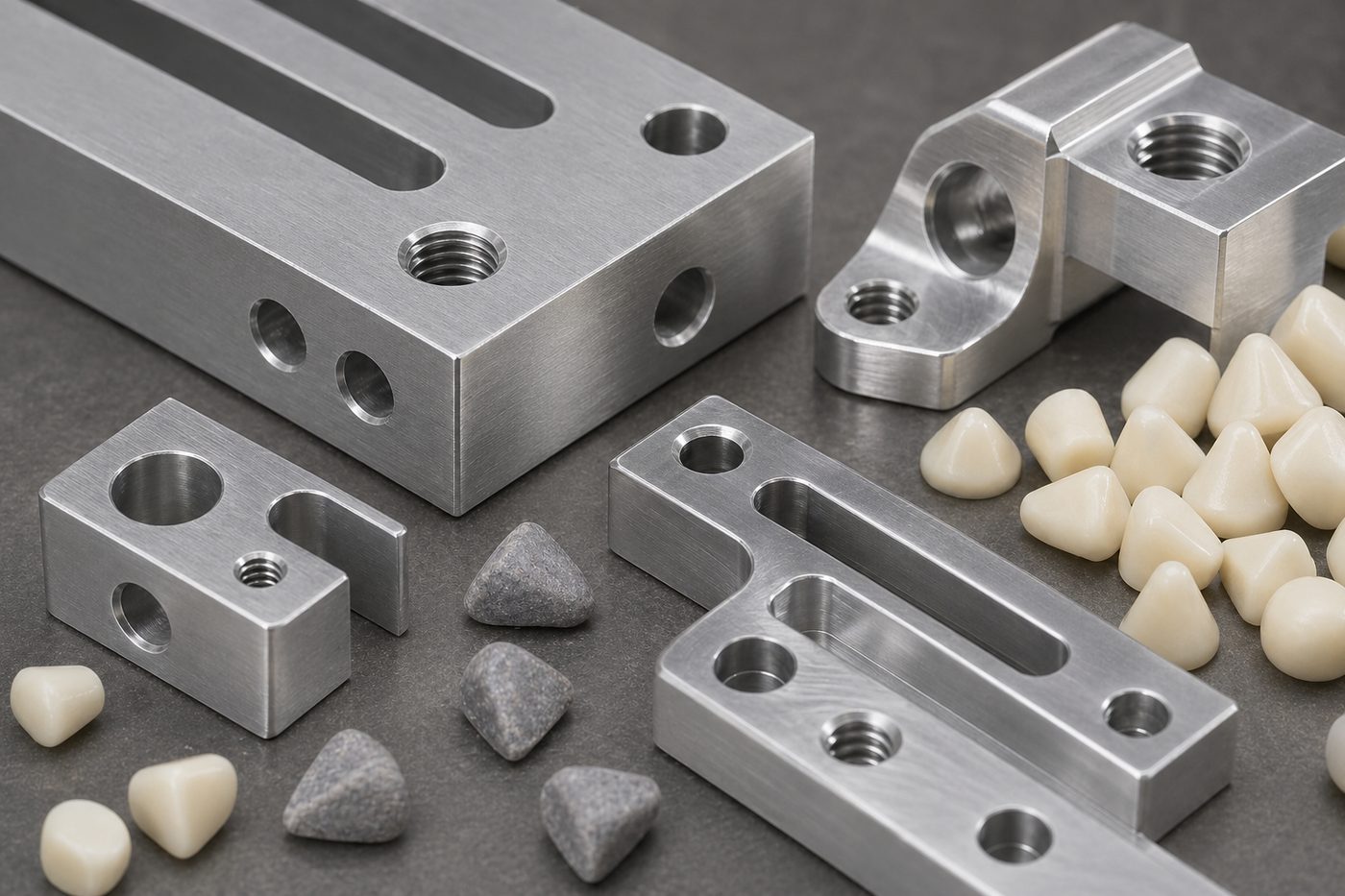
How to Remove Burrs from CNC Aluminum Parts Without Edge Damage CNC aluminum parts often need deburring after milling, drilling, tapping, or slotting. The challenge is not only removing burrs, but removing them without rounding critical edges, denting visible surfaces, damaging threads, or changing precision dimensions. A stable deburring process should protect the part while still producing clean...
Media Selection Guide Ceramic Media vs Plastic Media How to Choose the Right Tumbling Media When manufacturers face surface finishing challenges, the root cause is often not what they initially suspect. Parts come back from tumbling with inconsistent results — some look acceptable, others show defects that require rework or scrap. The key to solving these problems is understanding the process vari...
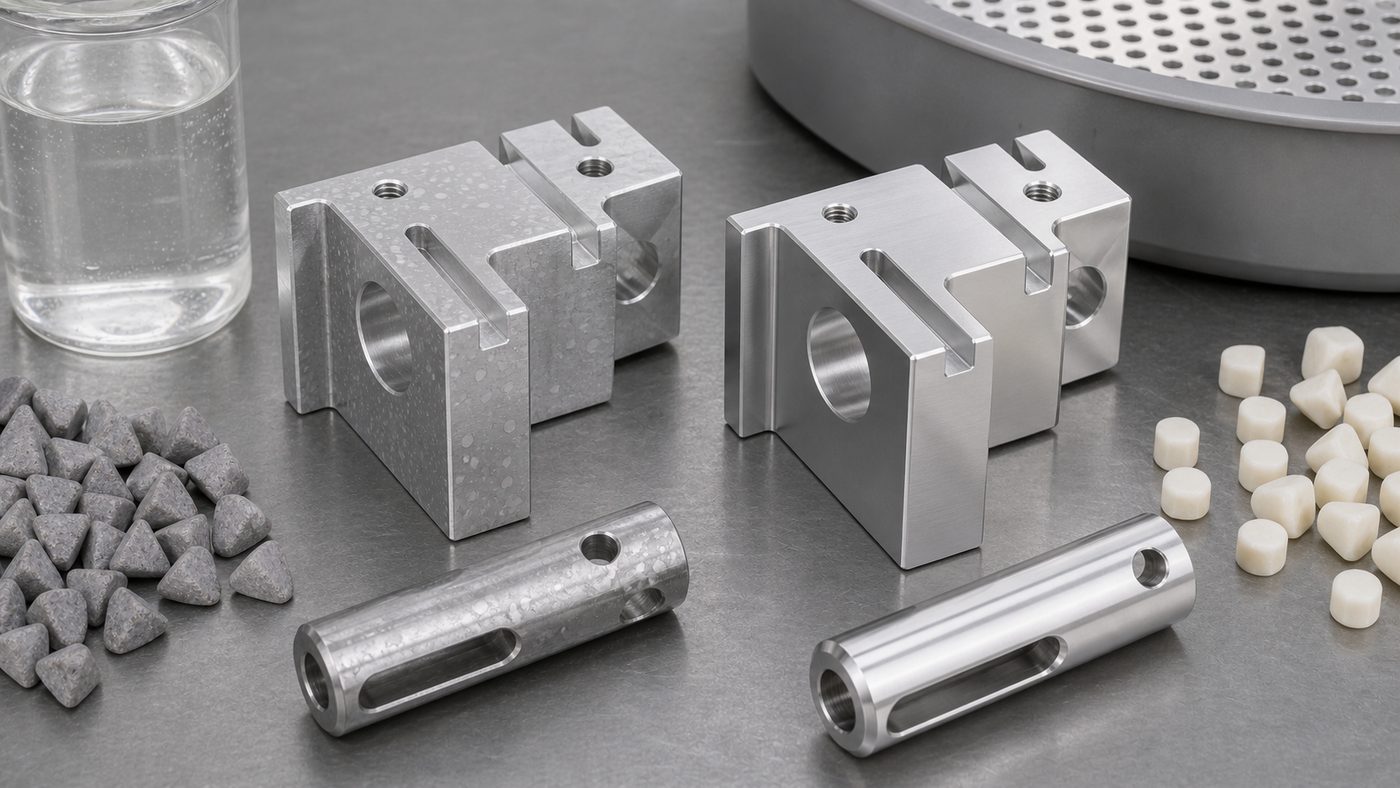
Media Selection Guide How to Prevent Tumbling Media from Lodging in Holes Slots and Threads When manufacturers face surface finishing challenges, the root cause is often not what they initially suspect. Parts come back from tumbling with inconsistent results — some look acceptable, others show defects that require rework or scrap. The key to solving these problems is understanding the process vari...



 IPv6 network supported


 +86-592-2381506