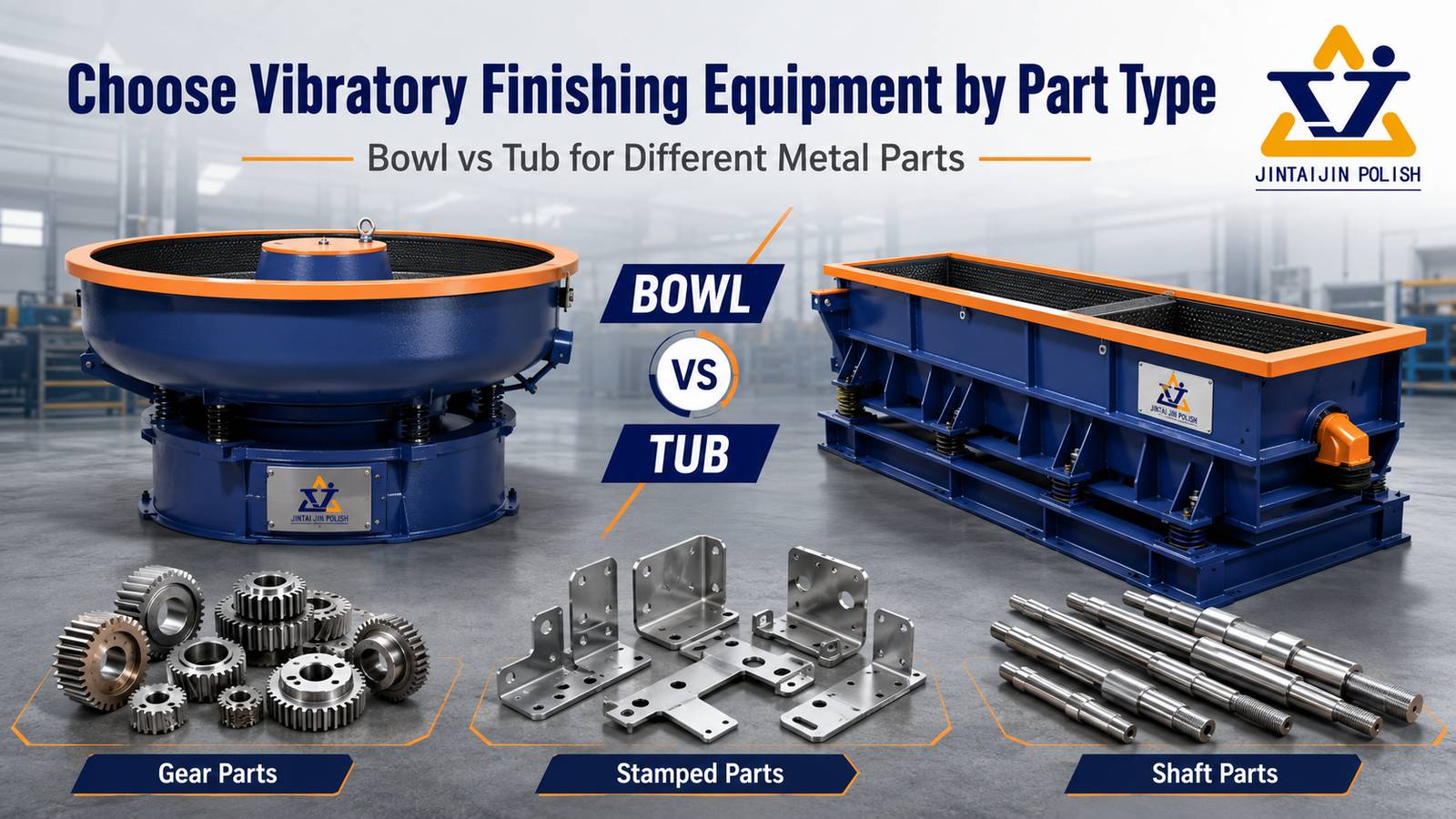
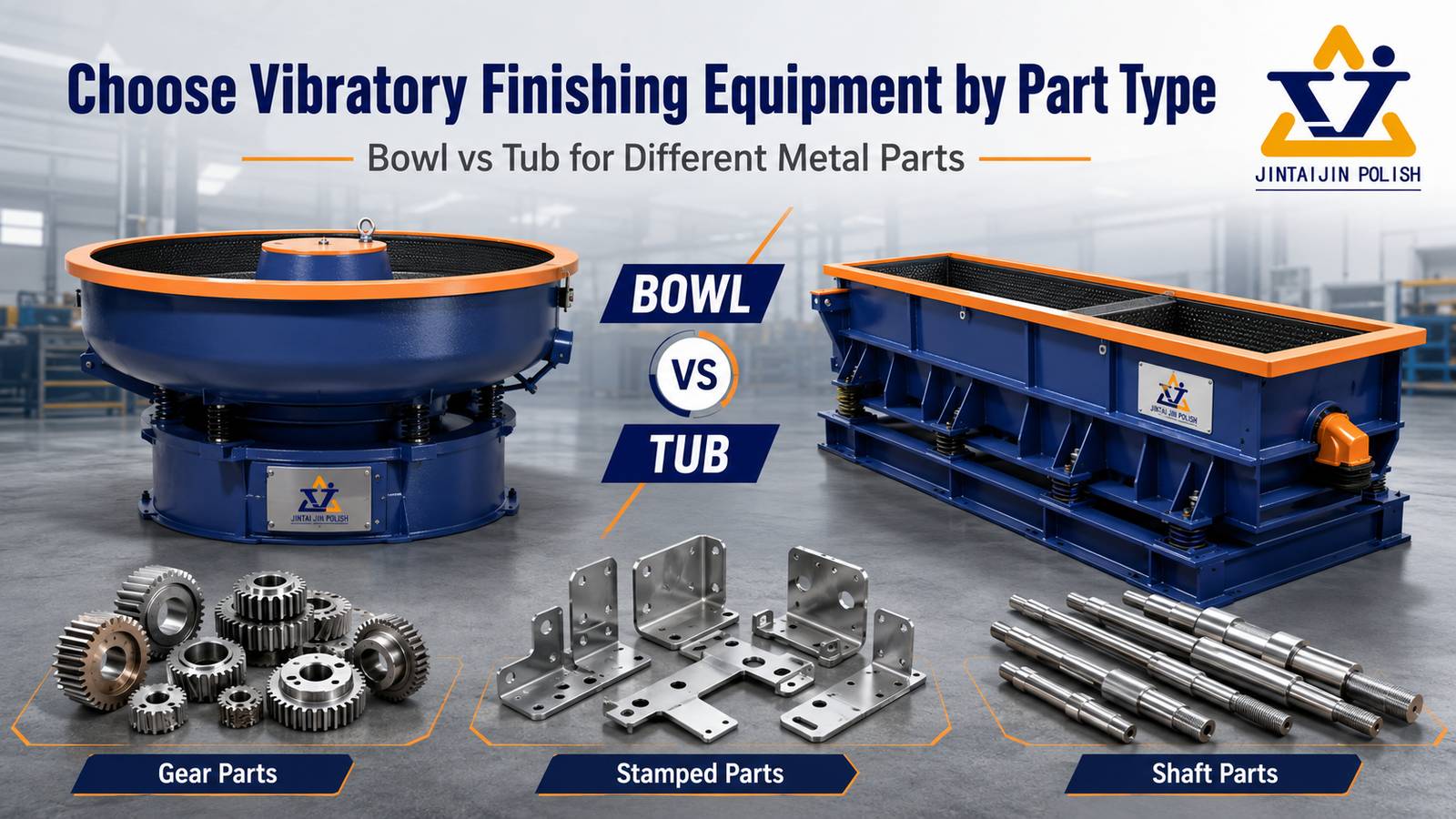
Ceramic vs Plastic Tumbling Media for Aluminum, Brass and Steel Parts Cover design direction: show the decision, not a generic machine hero. Add English labels “CERAMIC MEDIA” and “PLASTIC MEDIA” only if the cover is redesigned. How to Choose Ceramic vs Plastic Media for Aluminum, Brass and Steel Parts Short answer: choose ceramic media when controlled cutting, burr removal or edge radiusing is th...
Ceramic vs Plastic Tumbling Media for Aluminum, Brass and Steel Parts How to Choose Ceramic vs Plastic Media for Aluminum, Brass and Steel Parts Short answer: choose ceramic media when controlled cutting, burr removal or edge radiusing is the priority; choose plastic media when a lower-impact, lighter-contact process is needed for softer metals, cosmetic surfaces or a finer finishing stage. The co...
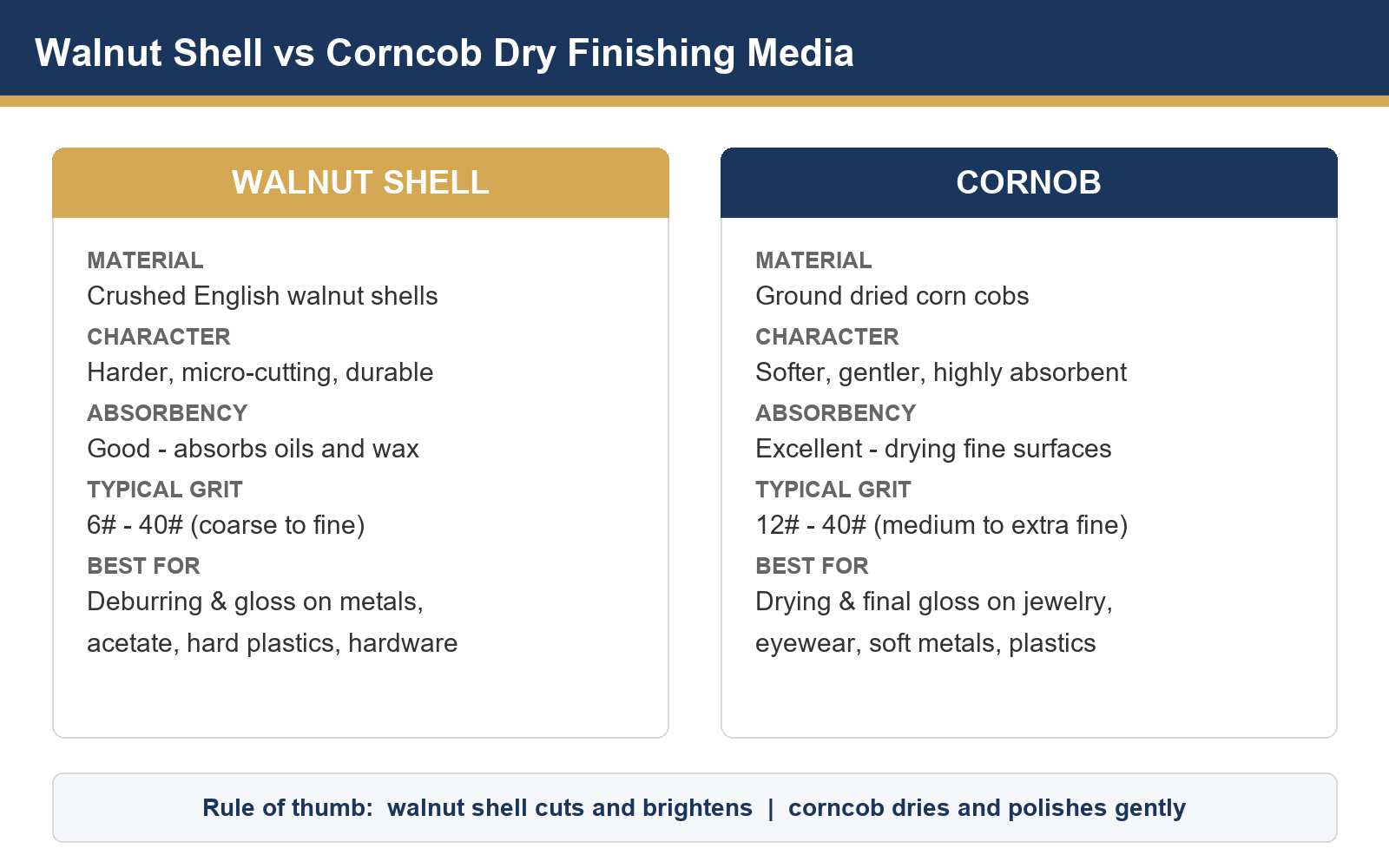
Walnut Shell vs Corncob: How to Choose Dry Tumbling Media for Eyewear, Jewelry & Hardware Dry finishing media selection guide • Walnut shell & corncob • For dry tumbling, vibratory and centrifugal lines Dry organic media — crushed walnut shell and ground corncob — is the workhorse of dry tumbling and dry vibratory finishing. The two materials look similar in the bag, but they behave very d...
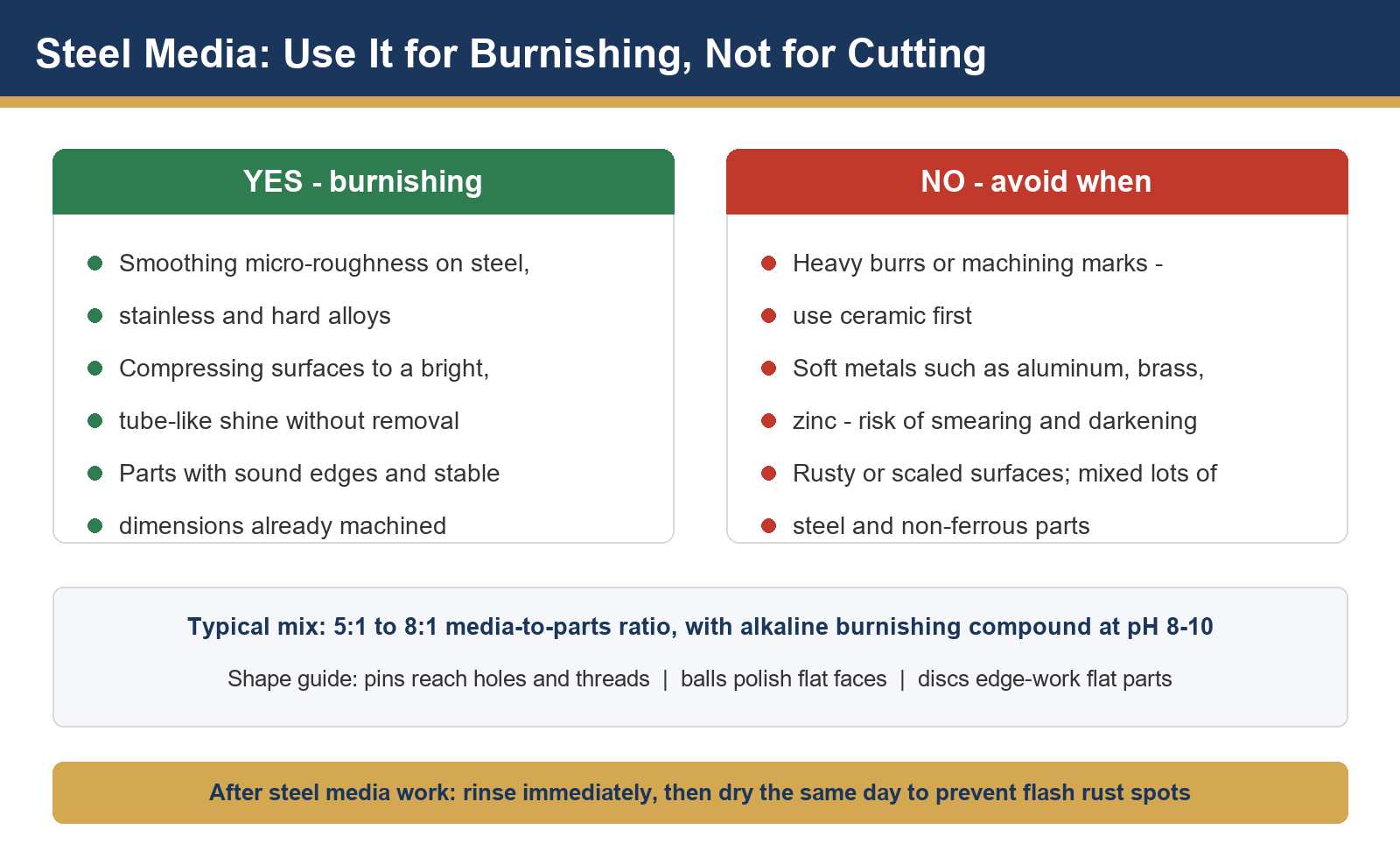
Steel Media Burnishing Guide: How It Creates Mirror Shine and When Not to Use It Steel finishing media • Pins, balls & discs • Burnishing process, compound pairing and limits Steel media is unique in mass finishing: it is the only media that polishes almost entirely without cutting. Hardened stainless pins, balls, and discs rub against parts under compound pressure, compressing micro-peaks int...
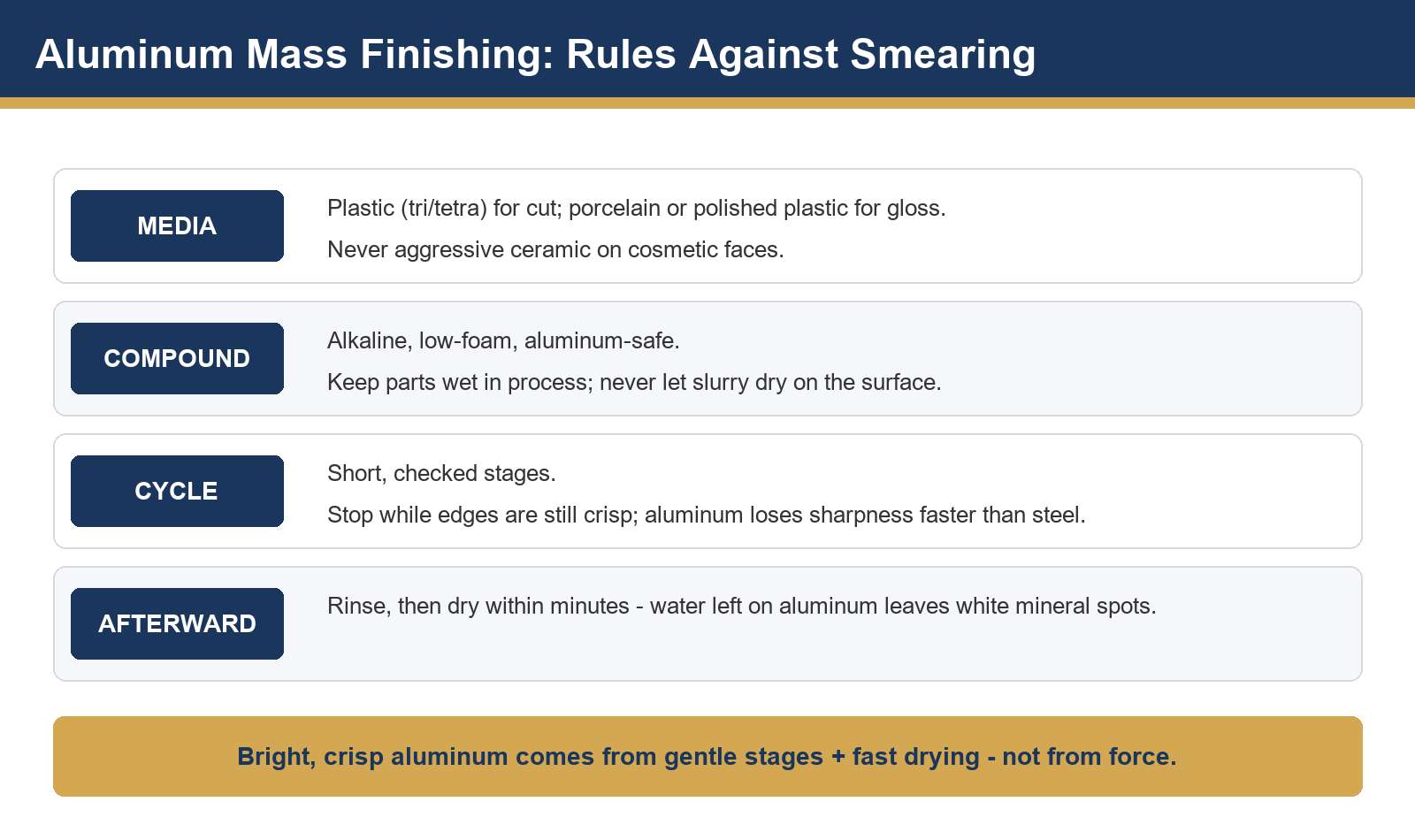
Mass Finishing Aluminum Parts: Deburr, Smooth and Brighten Without Smearing Aluminum surface finishing • Media, compound and cycle selection • From CNC parts to cosmetic components Aluminum is one of the most rewarding — and least forgiving — metals to mass finish. It deburrs fast, smooths beautifully, and polishes to an attractive satin-bright look. But it also smears under aggressive media, stai...