


How to Choose Ceramic vs Plastic Media for Aluminum, Brass and Steel Parts
Short answer: choose ceramic media when controlled cutting, burr removal or edge radiusing is the priority; choose plastic media when a lower-impact, lighter-contact process is needed for softer metals, cosmetic surfaces or a finer finishing stage. The correct choice still depends on part geometry, incoming defects, target finish, machine motion and trial results.
1. Start with the finishing objective
Separate the objective into one primary target and any secondary targets:
- Deburring: remove a defined burr without damaging threads, holes or sealing faces.
- Edge radiusing: create a controlled edge radius rather than simply making the edge “smooth.”
- Smoothing: reduce peaks and blend machining or casting marks.
- Polishing: improve brightness or reduce roughness after a suitable pre-finish.
- Cleaning: remove oil, scale or loose residue without over-processing the part.
Open research links material removal and surface topography to particle contacts, process parameters and initial surface condition. That is why the same media can behave differently on two parts that look similar but have different burr height, hardness or geometry.
2. Ceramic vs plastic: a practical comparison
| Decision factor | Ceramic media | Plastic media |
|---|---|---|
| Typical role | Cutting, deburring, edge radiusing, surface grinding | Lower-impact smoothing, polishing and separation-sensitive work |
| Contact behavior | Higher density can increase contact pressure and cutting action | Lighter contact can reduce impact on softer or cosmetic surfaces |
| Common fit | Steel, iron, aluminum, brass and difficult burrs | Aluminum, brass, plastics and parts where impact marks are a concern |
| Main risks | Excess edge rounding, media lodging or cosmetic impact if over-aggressive | Longer cycle, media wear, foam/chemistry sensitivity and insufficient burr removal |
| Best next step | Control shape, size, load and time with edge-radius checks | Check separation, surface appearance, wear and cycle-time stability |
This comparison is a selection framework synthesized from official media guidance and open finishing research; it is not a promise that every ceramic or plastic formulation will behave identically.
3. Match media to material and geometry
Aluminum
Aluminum often needs enough cutting action to remove burrs, but excessive impact or unsuitable chemistry can create cosmetic damage or residue. Begin with a less aggressive trial when the part has thin walls, visible faces or sealing surfaces. Use a small enough media size to reach the required features, while checking that it cannot lodge in holes or slots.
Brass
Brass valves and fittings require protection of threads, seats and sealing faces. Ceramic may be appropriate for controlled burr removal, while plastic may be preferable for a lighter finishing stage. Keep the objective explicit: thread-safe deburring is different from bright cosmetic polishing. See the existing brass valves and fittings guide for part-specific risks.
Steel and stainless steel
Steel parts can tolerate stronger cutting action than many soft alloys, but the required result may still be a controlled edge break rather than maximum stock removal. For small fasteners, compare burr removal, thread condition and media separation in the same trial record. Use the small fastener deburring guide as the application context.
4. Shape, size and the three failure modes to check
Media shape and access
Cylinders, triangles, angle-cut shapes and other geometries behave differently in slots, holes and recessed areas. A smaller media size can improve access, but it can also increase separation difficulty or lodging risk. Choose the smallest media that can be separated reliably after the process, not simply the smallest media available.
Part-on-part impact
Mixed loading, insufficient media coverage or an unsuitable machine motion can allow parts to strike each other. Inspect cosmetic faces, thin walls and sharp features after each trial stage. If contact damage is unacceptable, investigate fixturing, a different machine family or a lower-impact media/process combination.
Excess edge rounding
Deburring and edge radiusing are not the same as removing as much material as possible. Record burr height before processing and edge radius after processing. If the edge radius grows beyond the drawing or assembly requirement, reduce cutting intensity, cycle time or media aggressiveness before changing the entire machine concept.
5. Machine and compound choices
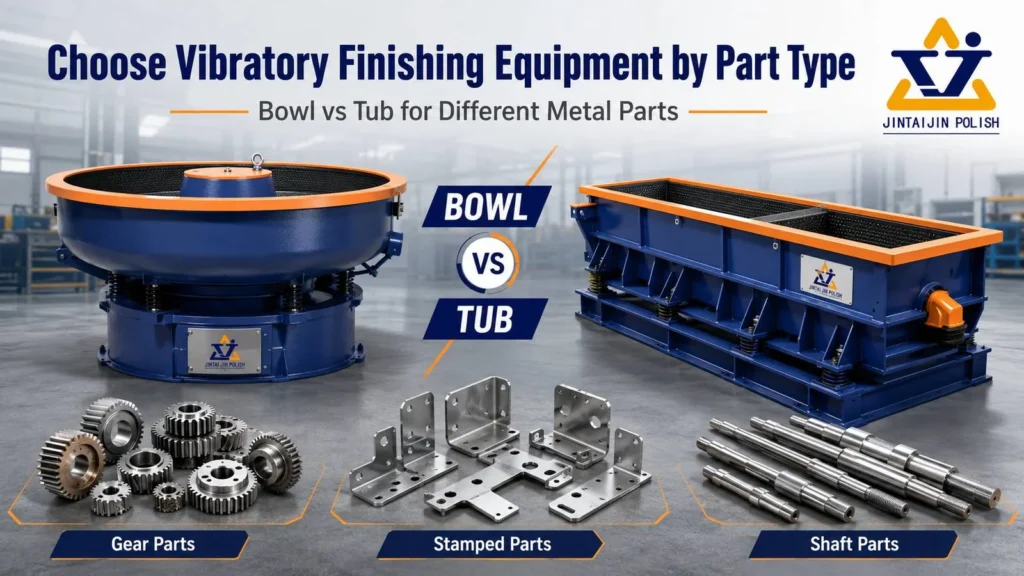
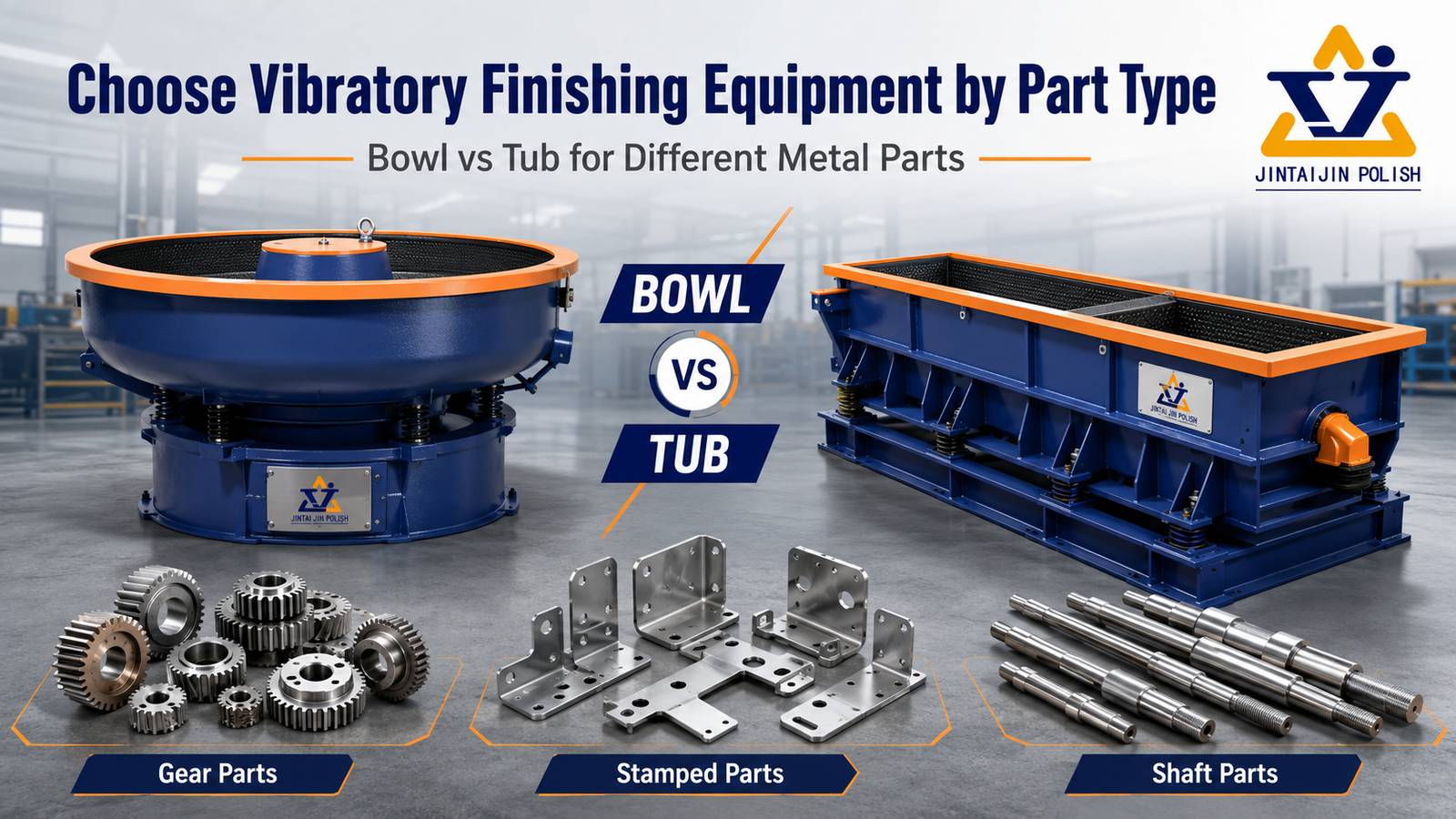
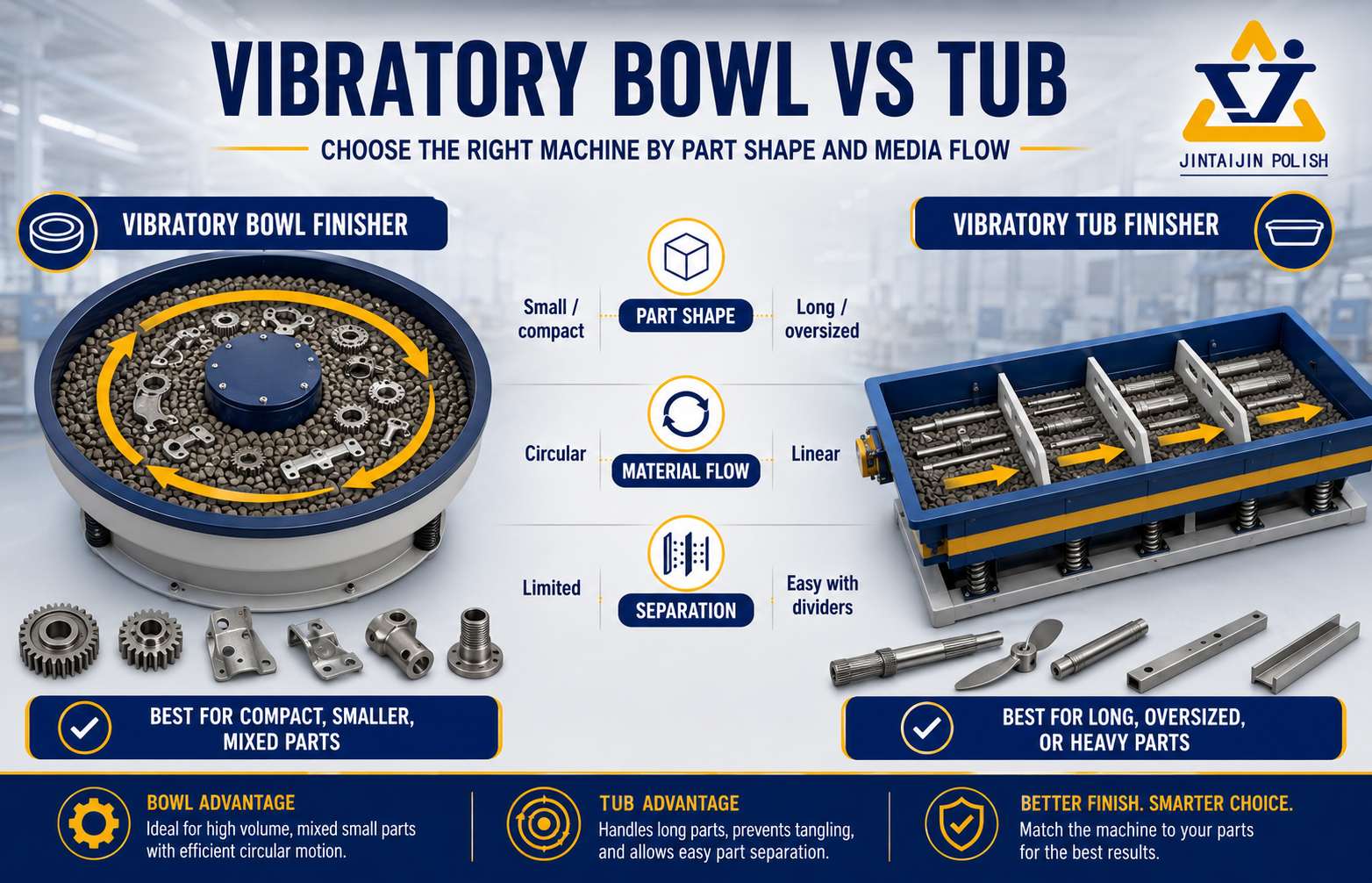
Media cannot be selected independently of the machine. A bowl, tub, rotary barrel, centrifugal unit, drag finisher or magnetic polisher creates a different contact pattern. For a broader bowl-versus-tub and capacity decision, use the existing vibratory machine selection guide. For small precision components and magnetic pins, compare the magnetic polishing machine page.
Wet processes also depend on water and compound condition. Track concentration, foam, contamination, pH or conductivity where relevant to the process. Dry finishing uses a different control logic: the medium, paste or powder, dust extraction and housekeeping must be evaluated together. Do not transfer a wet-process cycle directly to dry media.
6. A sample-trial method buyers can repeat
- Define the incoming condition: material, hardness if known, burr height, surface defects and critical dimensions.
- Mark critical zones: threads, holes, sealing faces, cosmetic faces and edges requiring a defined radius.
- Run a small matrix: ceramic vs plastic, two media sizes, and two cycle times. Change one variable at a time where possible.
- Record machine type, load ratio, media fill, compound/water condition, speed or frequency and actual cycle time.
- Measure burr height, edge radius, Ra/Sa where specified, visual defects and media separation performance.
- Keep samples and photographs with the trial record. Approve a recipe only after repeat runs show stable results.
Use the printable mass-finishing sample trial record to keep the comparison auditable.
7. Buyer checklist before requesting a quotation
- Part material, hardness and surface condition
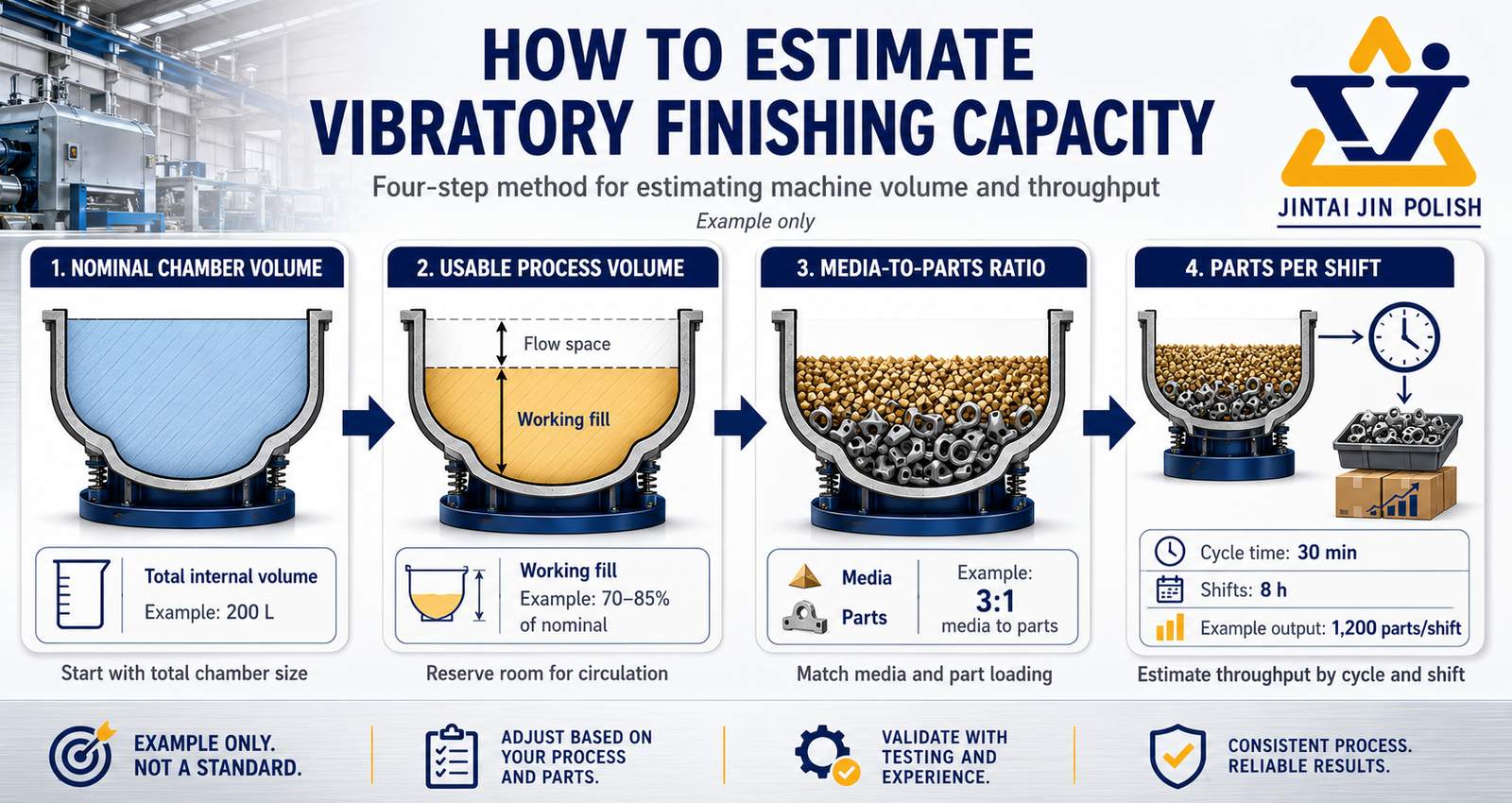
- Part dimensions, weight, batch size and production target
- Smallest hole/slot and any media-lodging risk
- Critical edges, threads, sealing faces and cosmetic surfaces
- Target burr height, edge radius, roughness or visual standard
- Wet or dry process preference, water handling and separation requirements
- Photos or drawings that can be shared for a sample trial
Need help selecting media?
Send the part material, geometry, incoming defect, target finish and a few representative samples. We can help define a trial matrix and identify the machine, media and compound variables that need confirmation.
Source basis and evidence boundary
This article synthesizes public technical information from Rösler, OTEC and Walther Trowal with open research on material removal, contact conditions, roughness measurement and additive-manufacturing post-processing. Manufacturer pages describe their own systems and consumables; research results apply to their stated test conditions. Production parameters, finish guarantees and compliance claims require a representative sample trial.
 +86-592-2381506

 IPv6 network supported