Process Troubleshooting Why Stainless Steel Parts Are Not Bright After Tumbling and How to Improve the Finish Surface finishing defects are often caused by interactions between multiple process variables rather than a single root cause. A systematic approach to identifying the actual problem reduces wasted time, media, and compound, and leads to faster process correction. When surface defects appe...
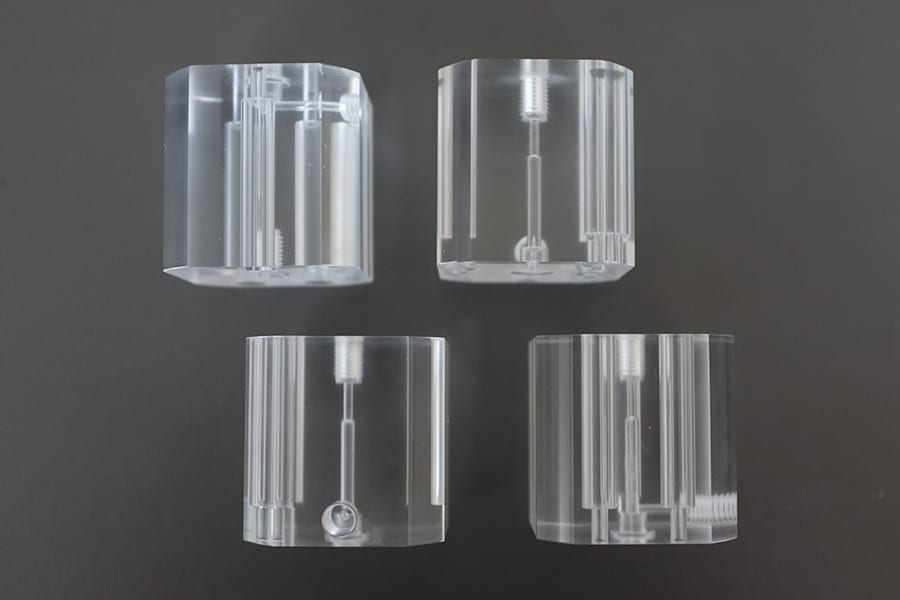
Plastic and Rubber Part Finishing Guide How to Deburr Plastic and Rubber Parts: Mass Finishing, Media, and Process Limits Flash, gate marks, machining burrs, and rough build lines do not all respond to the same finishing method. This guide explains when mass finishing is a practical option for plastic and rubber parts, how to select equipment and media, and when trimming, blasting, or cryogenic de...
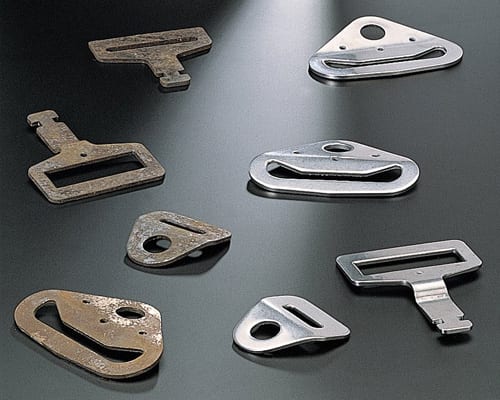
Stamped Parts Finishing Guide How to Deburr Stamped Metal Parts Without Tangling, Distortion, or Part-on-Part Damage Stamped washers, clips, brackets, and thin sheet-metal parts can be efficient mass-finishing candidates, but their geometry creates risks that solid machined parts do not have. This guide explains how to evaluate the burr, select a machine and media, control part interaction, and bu...
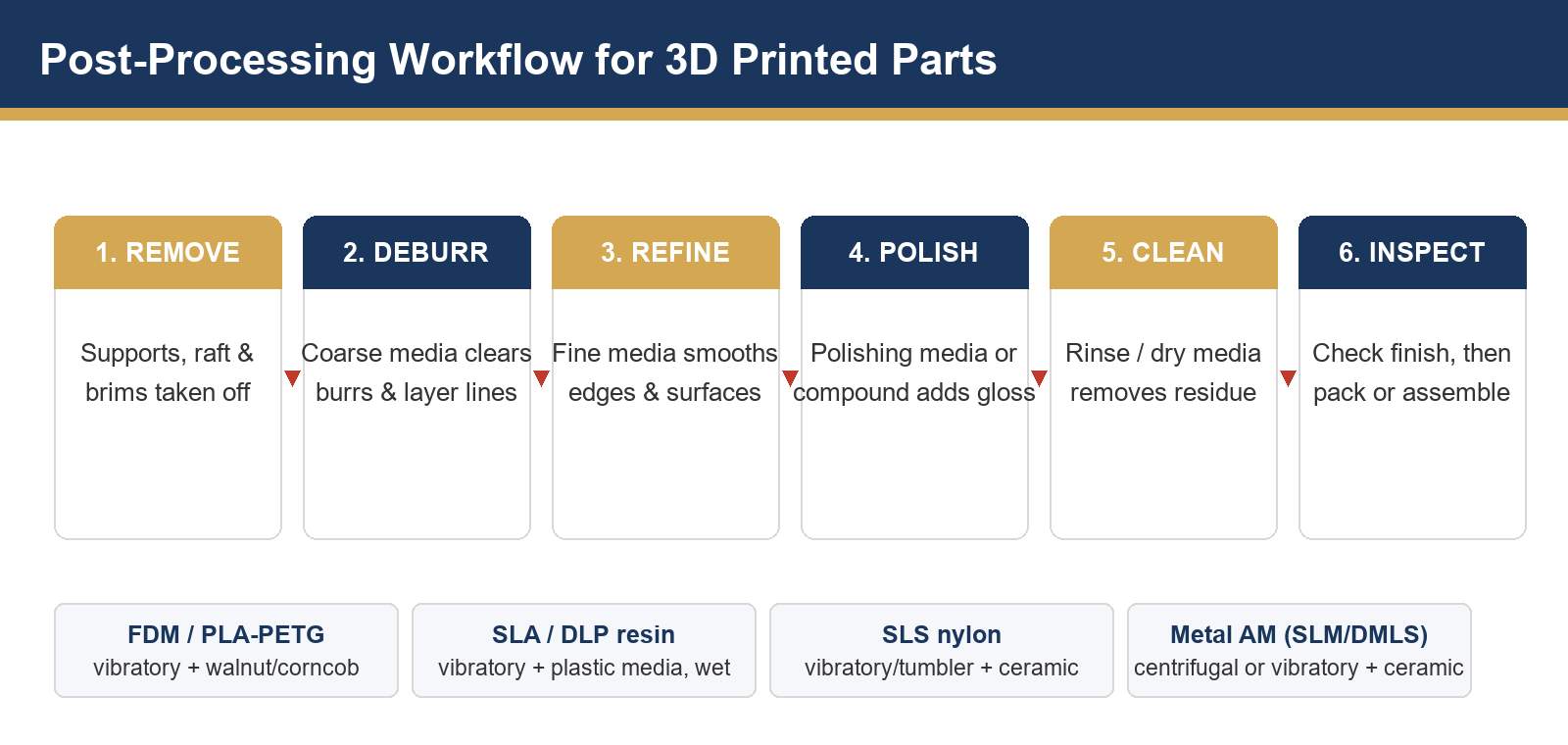
Mass Finishing for 3D Printed Parts: Deburring and Polishing Additive Manufacturing Components Additive manufacturing post-processing • Deburring, smoothing & polishing • FDM, SLA/DLP, SLS & metal AM parts 3D printing turns out parts close to final shape, but almost never close to final surface. Support scars, layer lines, partially fused powder, and sharp edges stand between a fresh print...
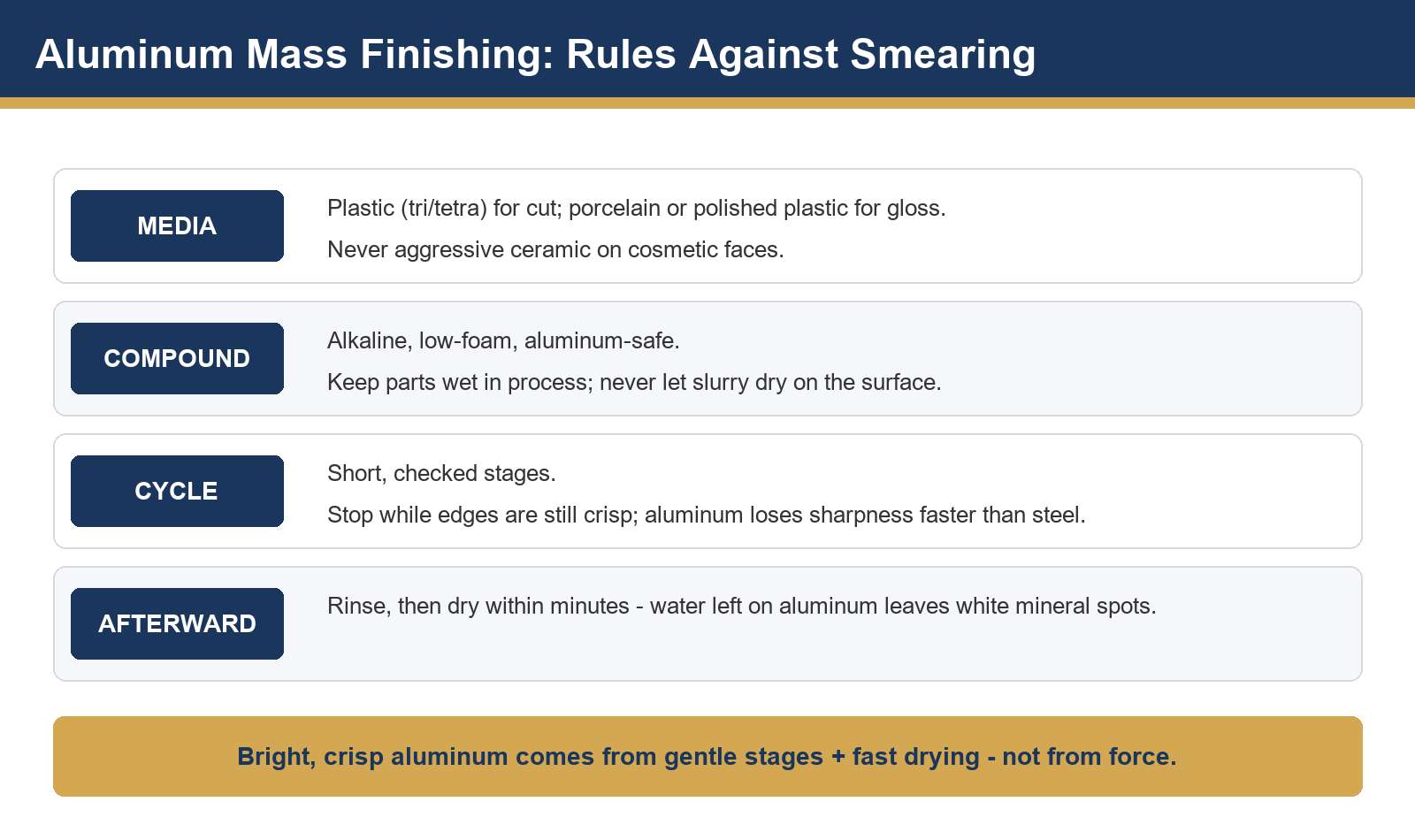
Mass Finishing Aluminum Parts: Deburr, Smooth and Brighten Without Smearing Aluminum surface finishing • Media, compound and cycle selection • From CNC parts to cosmetic components Aluminum is one of the most rewarding — and least forgiving — metals to mass finish. It deburrs fast, smooths beautifully, and polishes to an attractive satin-bright look. But it also smears under aggressive media, stai...



 IPv6 network supported


 +86-592-2381506