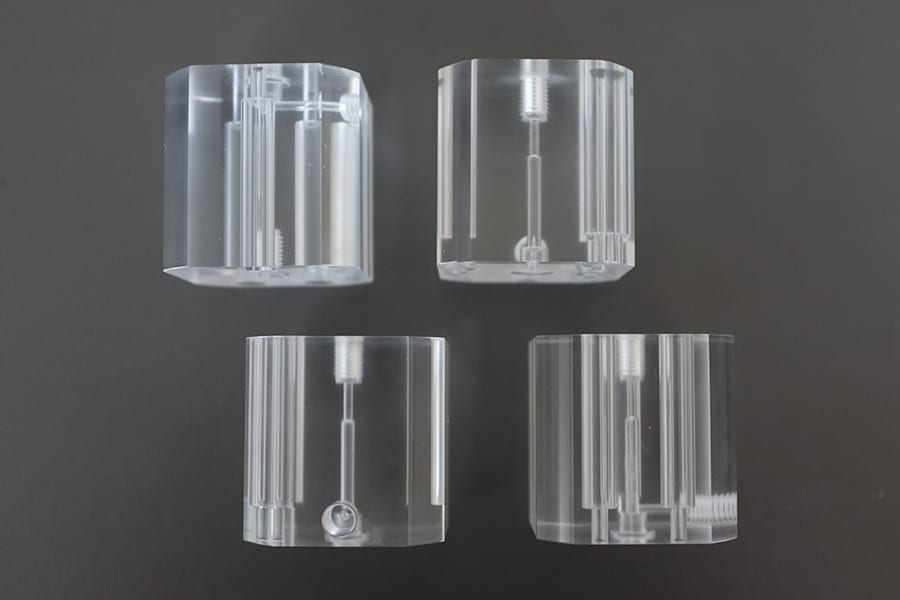
Plastic and Rubber Part Finishing Guide How to Deburr Plastic and Rubber Parts: Mass Finishing, Media, and Process Limits Flash, gate marks, machining burrs, and rough build lines do not all respond to the same finishing method. This guide explains when mass finishing is a practical option for plastic and rubber parts, how to select equipment and media, and when trimming, blasting, or cryogenic de...
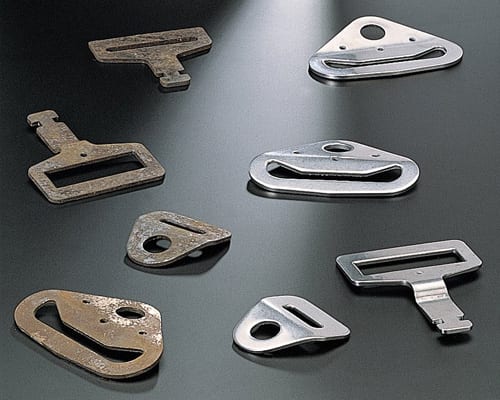
Stamped Parts Finishing Guide How to Deburr Stamped Metal Parts Without Tangling, Distortion, or Part-on-Part Damage Stamped washers, clips, brackets, and thin sheet-metal parts can be efficient mass-finishing candidates, but their geometry creates risks that solid machined parts do not have. This guide explains how to evaluate the burr, select a machine and media, control part interaction, and bu...
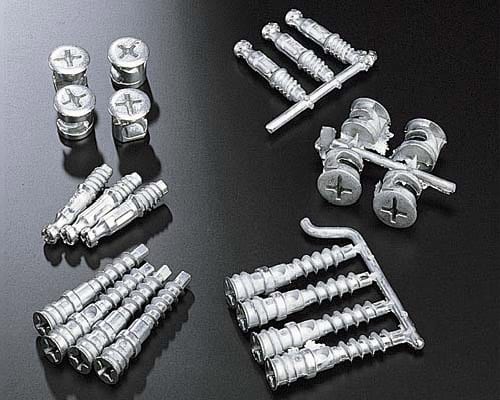
Small Parts Finishing Guide How to Deburr Small Fasteners Without Damaging Threads, Points, or Recesses Screws, bolts, nails, pins, and rivets can be processed in bulk, but their functional features make them less forgiving than simple metal blanks. The right mass finishing process must remove loose burrs while protecting threads, points, drive recesses, hollow sections, and dimensional fit. Small...
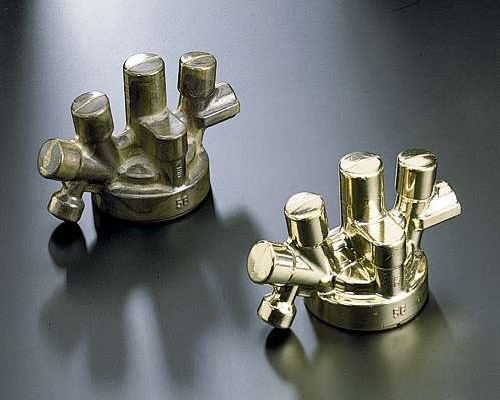
Brass Component Finishing Guide How to Finish Brass Valves and Fittings Without Damaging Threads or Sealing Surfaces Brass valve bodies, pipe fittings, sleeves, and connectors can be deburred and surface-finished in batches, but their threads, bores, sealing faces, flats, and thin edges require separate protection and inspection. The best process removes the actual defect without changing how the ...
Printable Process-Control Resource Mass Finishing Sample Trial Record for Small Precision Parts Use this non-promotional worksheet to define the incoming part, record one controlled finishing trial, compare results, and decide whether the process is ready for a repeat run. Important: This record does not replace a drawing, control plan, safety procedure, material compatibility review, or customer ...
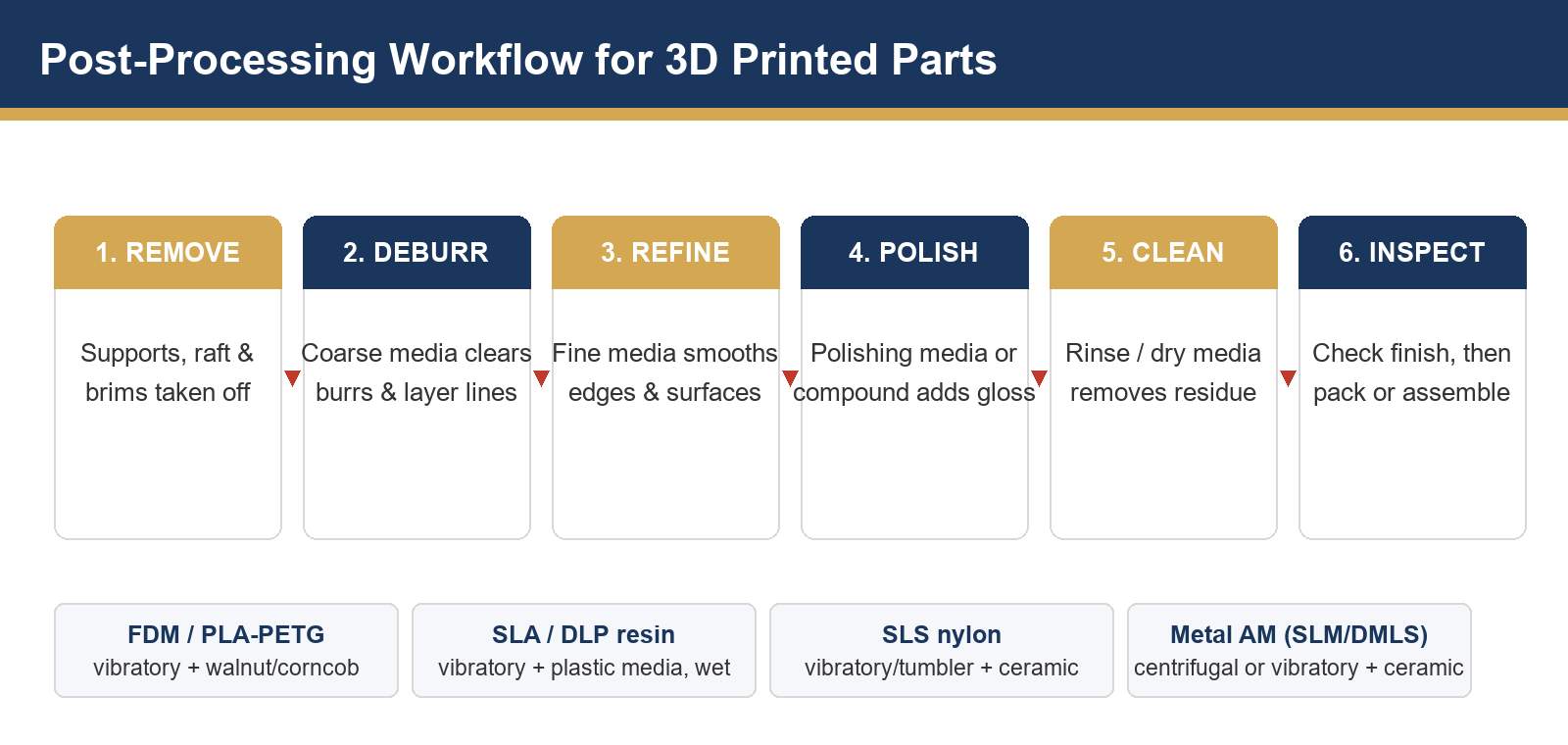
Mass Finishing for 3D Printed Parts: Deburring and Polishing Additive Manufacturing Components Additive manufacturing post-processing • Deburring, smoothing & polishing • FDM, SLA/DLP, SLS & metal AM parts 3D printing turns out parts close to final shape, but almost never close to final surface. Support scars, layer lines, partially fused powder, and sharp edges stand between a fresh print...
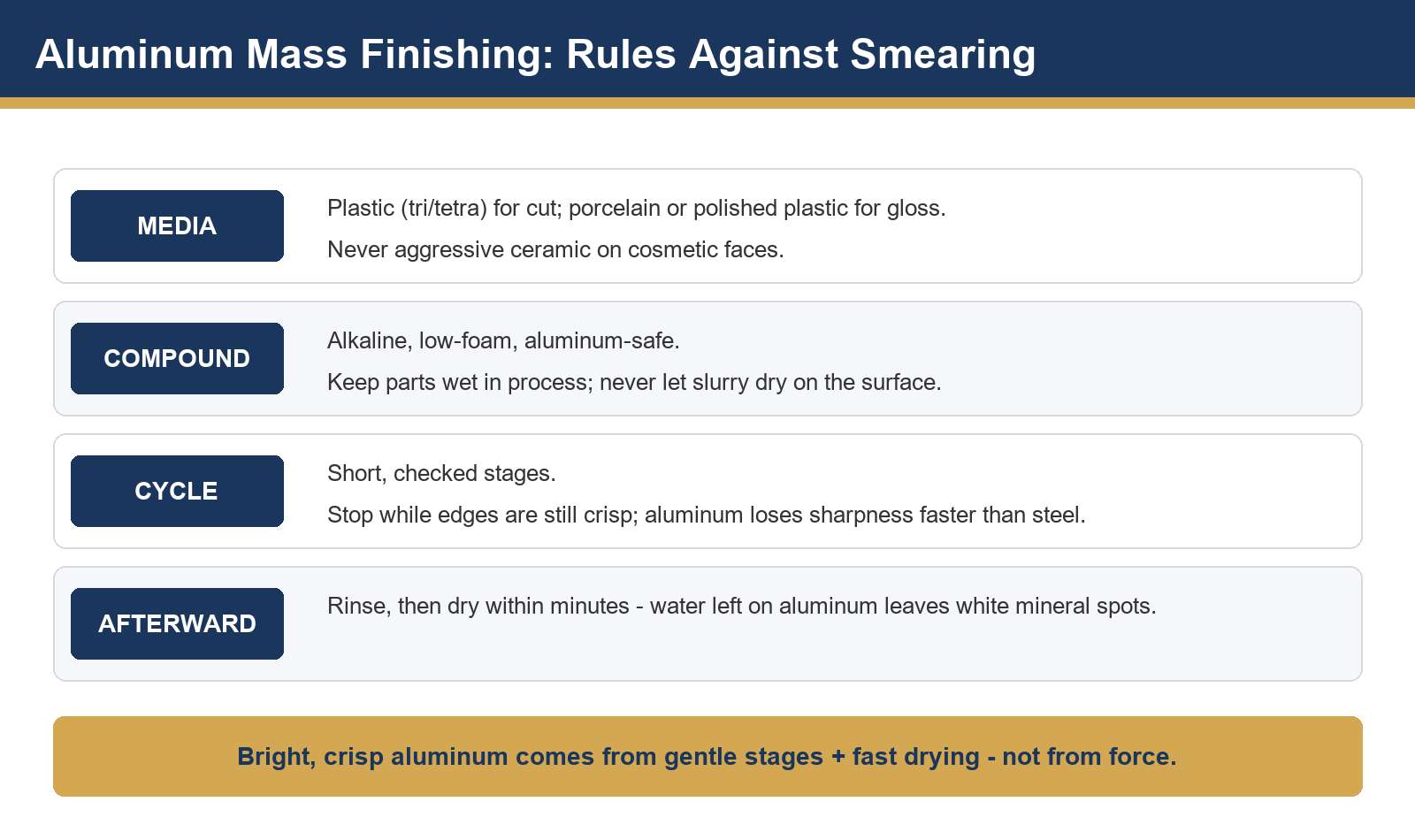
Mass Finishing Aluminum Parts: Deburr, Smooth and Brighten Without Smearing Aluminum surface finishing • Media, compound and cycle selection • From CNC parts to cosmetic components Aluminum is one of the most rewarding — and least forgiving — metals to mass finish. It deburrs fast, smooths beautifully, and polishes to an attractive satin-bright look. But it also smears under aggressive media, stai...


 IPv6 network supported


 +86-592-2381506