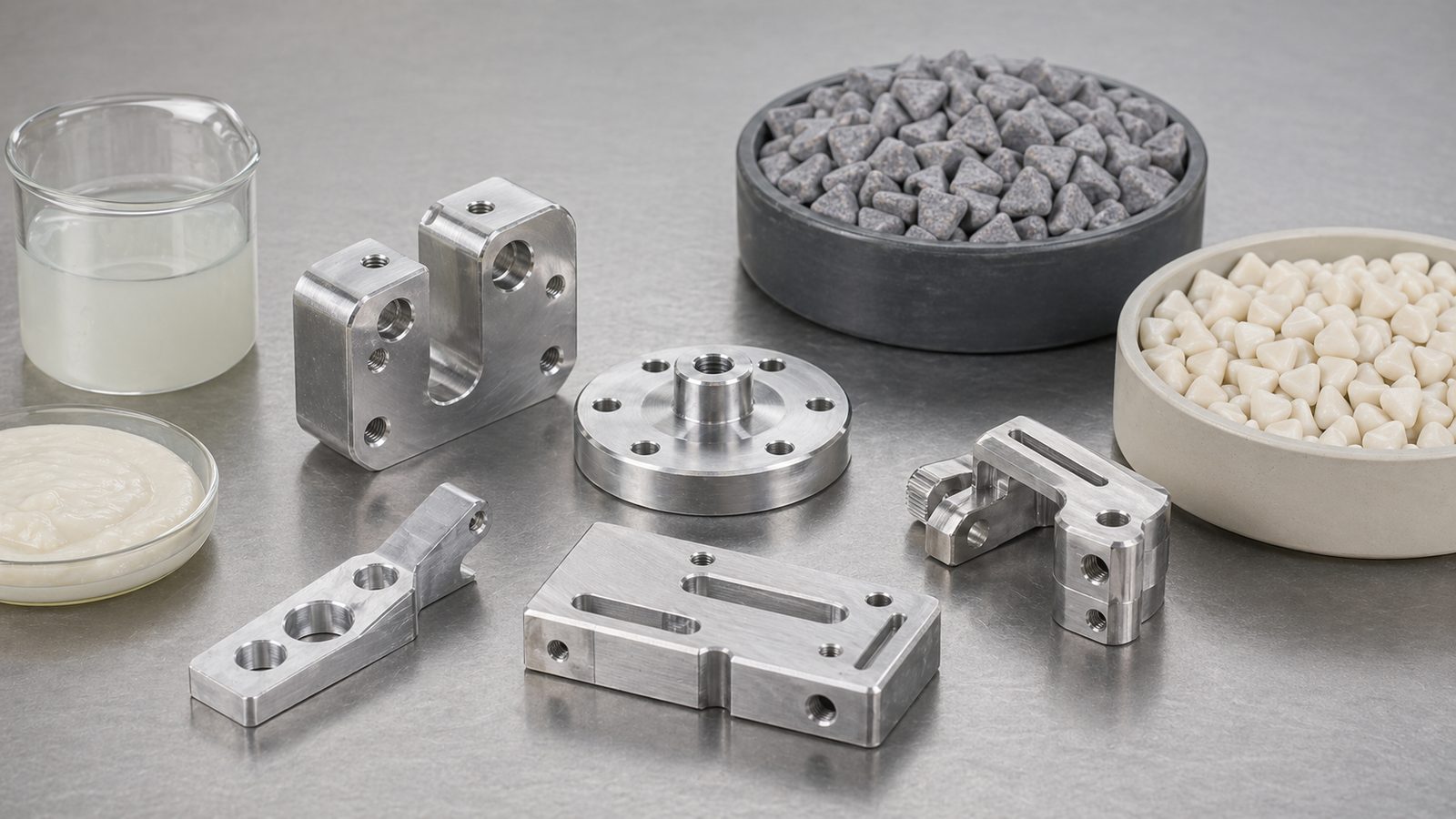
CNC Aluminum Deburring Guide How to Remove Burrs from CNC Aluminum Parts Without Edge Damage A controlled mass-finishing process can remove light machining burrs, soften tool marks, and prepare aluminum parts for anodizing or coating. The challenge is to remove the burr without rounding functional edges, changing hole geometry, denting the surface, or staining the alloy. CNC aluminum components of...
Surface Finishing Vibratory Finishing vs Barrel Tumbling Which Process Fits Your Parts When manufacturers face surface finishing challenges, the root cause is often not what they initially suspect. Parts come back from tumbling with inconsistent results — some look acceptable, others show defects that require rework or scrap. The key to solving these problems is understanding the process variables...
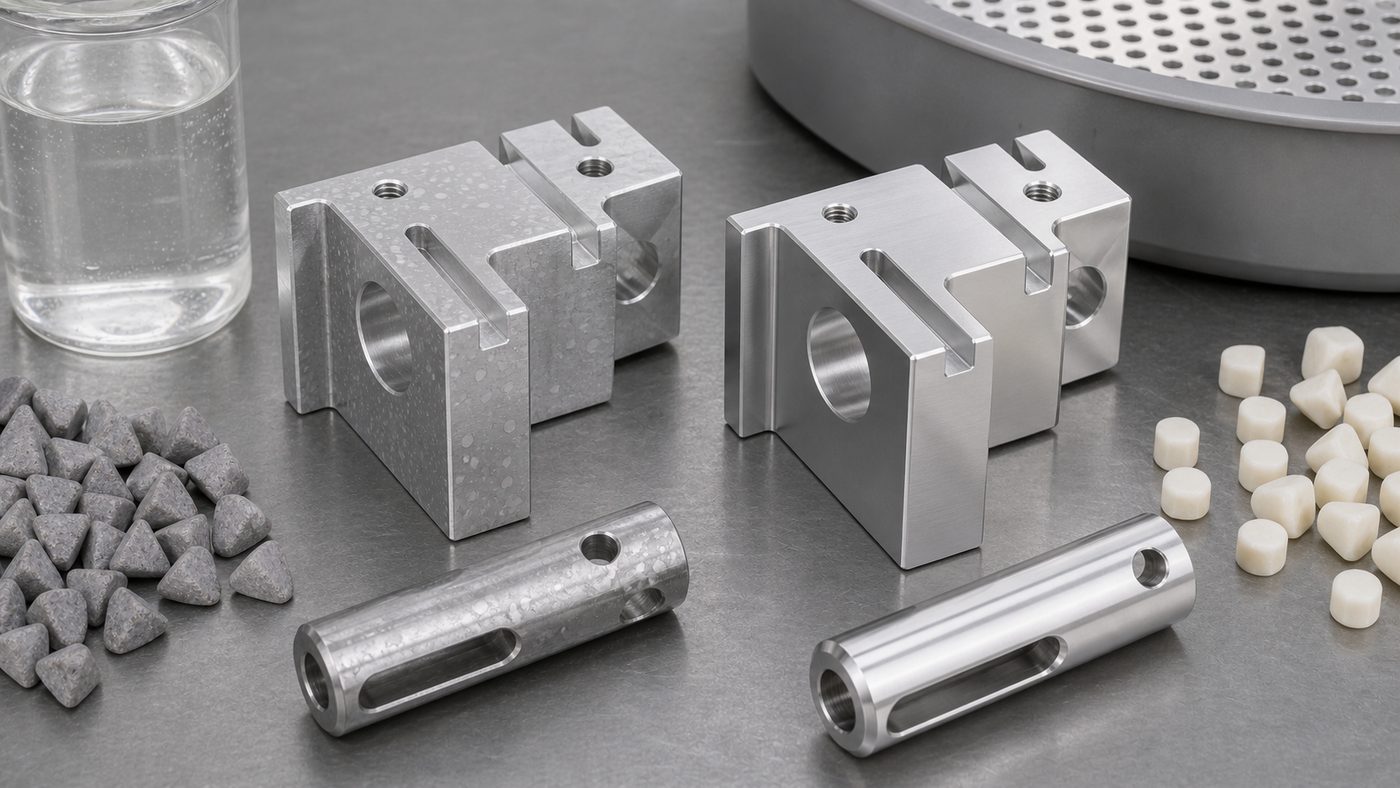
Process Troubleshooting Why Your Parts Have Water Spots After Vibratory Finishing and How to Fix It When manufacturers face surface finishing challenges, the root cause is often not what they initially suspect. Parts come back from tumbling with inconsistent results — some look acceptable, others show defects that require rework or scrap. The key to solving these problems is understanding the proc...
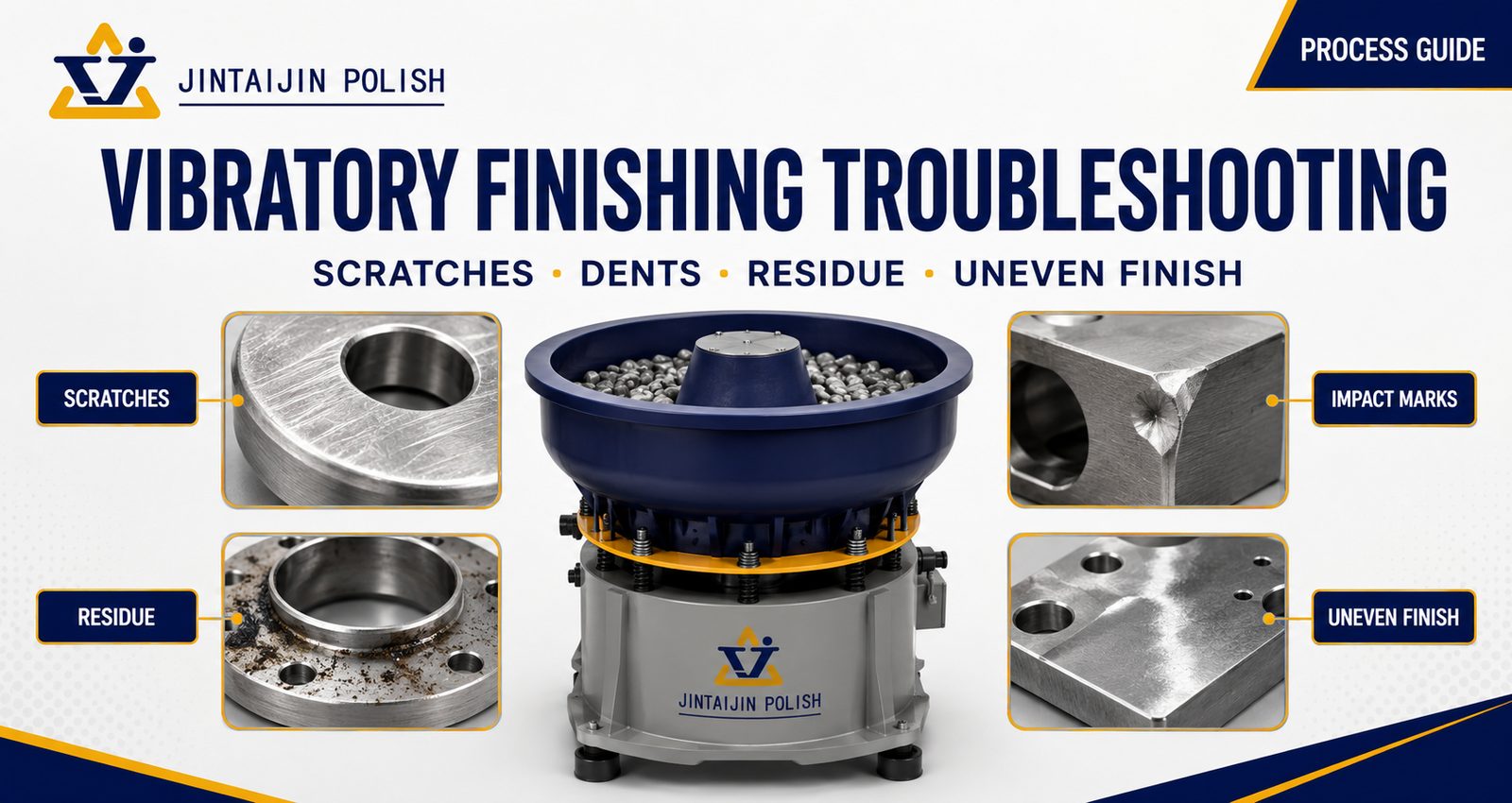
Process Troubleshooting Guide Vibratory Finishing Troubleshooting: How to Fix Scratches, Dents, Residue, and Uneven Results Most vibratory finishing defects are caused by an interaction between parts, media, compound, water, machine settings, and post-process handling. This guide helps you identify the visible symptom, isolate the likely cause, and test one controlled adjustment at a time. When a ...
Process Troubleshooting Why Your Parts Have Water Spots After Vibratory Finishing and How to Fix It Surface finishing defects are often caused by interactions between multiple process variables rather than a single root cause. A systematic approach to identifying the actual problem reduces wasted time, media, and compound, and leads to faster process correction. When surface defects appear after f...
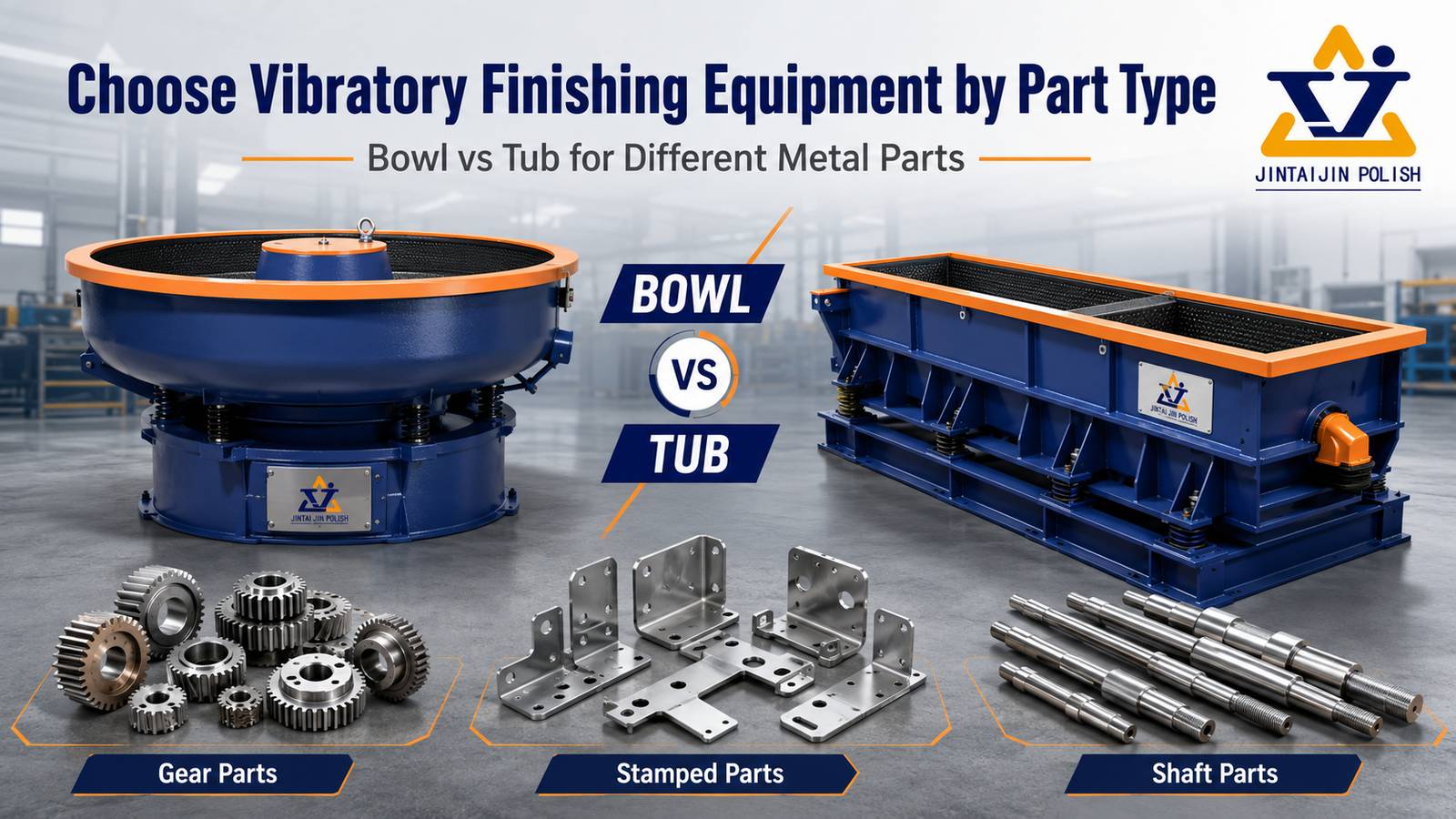
Equipment Selection Guide How to Choose a Vibratory Finishing Machine for Metal Parts: Bowl, Tub, Capacity, and Process Guide The right vibratory finishing machine is determined by the parts and the required production result—not by chamber volume alone. This guide explains how to compare bowl and tub machines, estimate practical capacity, match media and process settings, and prepare the informat...
Process Troubleshooting Why Your Parts Have Water Spots After Vibratory Finishing and How to Fix It Surface finishing defects are often caused by interactions between multiple process variables rather than a single root cause. A systematic approach to identifying the actual problem reduces wasted time, media, and compound, and leads to faster process correction. When surface defects appear after f...
Process Comparison Vibratory Finishing vs Barrel Tumbling Which Process Fits Your Parts Choosing between two finishing processes requires understanding how each method applies energy to the media, how the media contacts the part, and how the process variables scale with batch size and production rate. This comparison covers the key differences to help you decide which process matches your producti...


 IPv6 network supported


 +86-592-2381506