• How to Measure Burr Height, Edge Change and Ra After Deburring
    How to Measure Burr Height, Edge Change and Ra After Deburring July 31, 2026
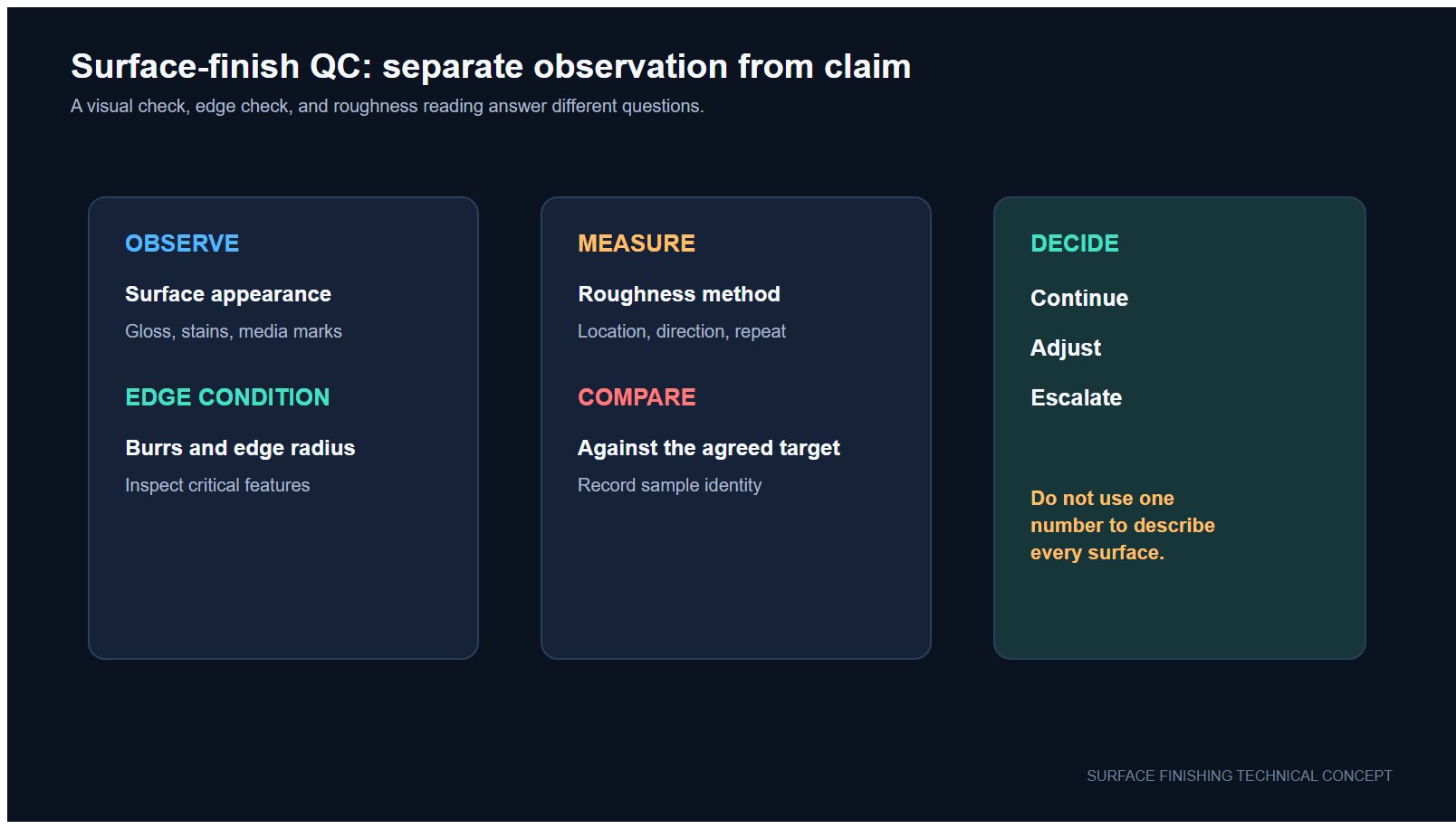
    How to Measure Burr Height, Edge Change and Ra After Deburring A finishing trial is difficult to approve when “looks smoother” is the only result. Burr removal, edge preservation and surface texture are different questions, so they need separate checks. This practical measurement plan helps buyers and suppliers compare incoming parts with trial samples without inventing a universal acceptance limit. Conceptual measurement workflow. The drawing does not represent a measured customer result. Start with the drawing and the functional risk Mark the features that affect fit, sealing, coating, assembly or handling. A burr at a cross-hole may need a height check; a functional edge may need radius or profile comparison; a sealing face may need a specified surface-texture parameter. Do not replace the drawing requirement with a generic “polished” target. Keep three questions separate 1. Is the burr still present? Use a defined viewing direction and a repeatable optical or profile method. Record the feature location, magnification or instrument, lighting, fixture and whether the result is a maximum reading, a profile value or a pass/fail visual rule. Photograph the same feature before and after the trial when practical. 2. Has the edge changed? Measure the edge where function requires control. Depending on the drawing and access, this may be an edge radius, chamfer dimension or profile comparison. Record the datum, section or inspection plane so the next sample is measured in the same place. Surface roughness cannot substitute for this geometry check. 3. Has the surface texture changed? Report the specified parameter, such as Ra or another drawing-defined profile parameter, together with the instrument and method settings. NIST documentation shows that stylus geometry, filtering, sampling and calibration affect a surface-profile measurement. Keep the method and measurement direction consistent between the incoming and processed samples. Record the method with the number; do not compare isolated readings from unknown settings. Build a measurement card before the trial Field What to record Why it matters Part and feature Part ID, drawing revision, feature ID and inspection location Prevents measurements from drifting to an easier area Incoming condition Burr direction, visible damage and baseline readings Separates process change from incoming variation Burr method Optical/profile method, fixture, direction and reporting rule Makes the residual-burr decision repeatable Edge method Radius, chamfer or profile method and datum Checks whether functional geometry was preserved Texture method Parameter, instrument, tip or optical method, filter/cutoff, evaluation length and direction Lets before-and-after texture readings be compared Sampling Number of parts, locations per part and handling rule Avoids approving a batch from one convenient point Decision Drawing limit or agreed trial criterion, result and disposition Creates an auditable release record Do not mix ...
    View More
  • Vibratory Finishing Water and Compound Control: A Practical Trial Method
    Vibratory Finishing Water and Compound Control: A Practical Trial Method July 30, 2026
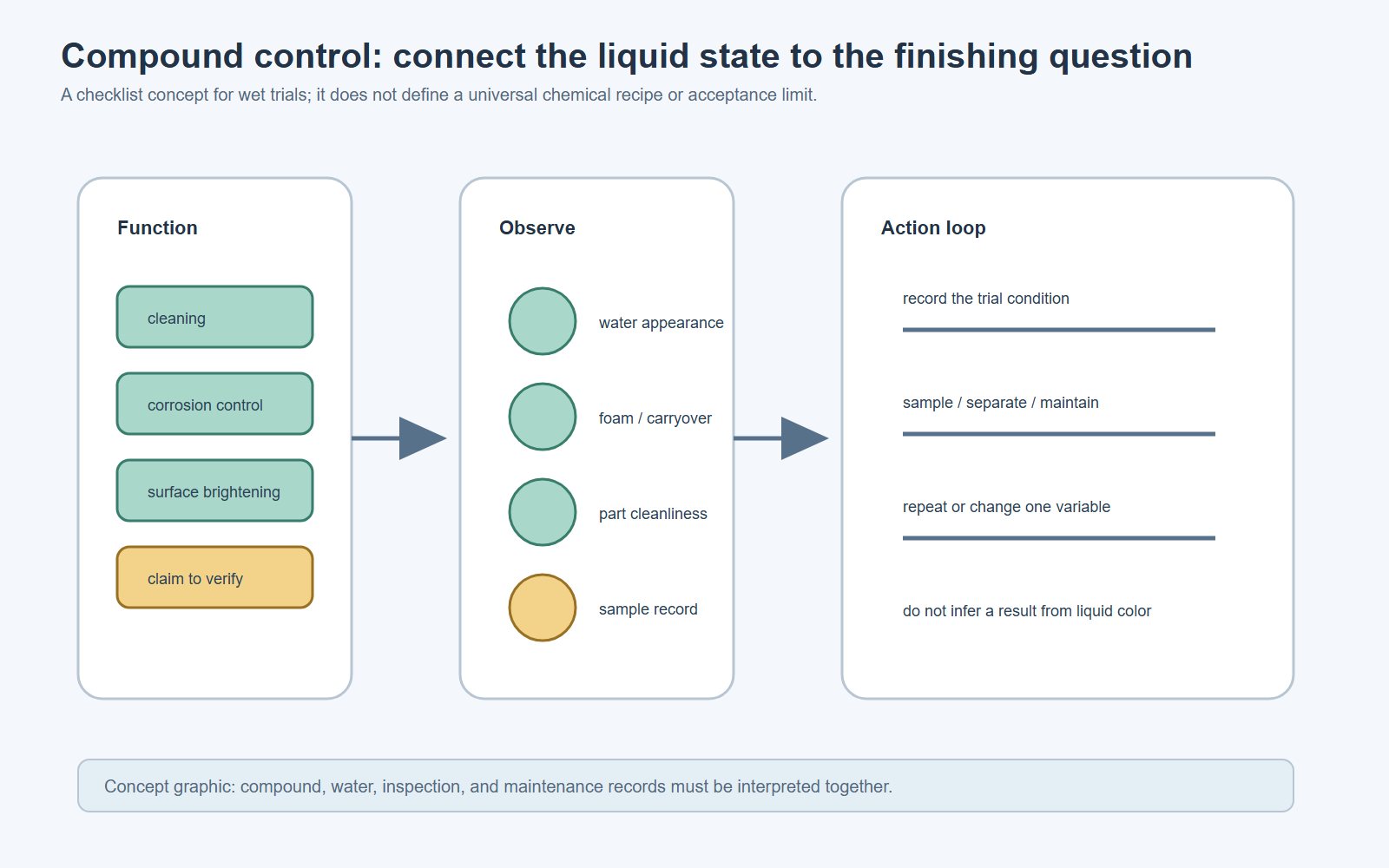
    Vibratory Finishing Water and Compound Control: A Practical Trial Method Water and compound are process variables, not background supplies. In wet vibratory finishing they help carry away media and workpiece fines, keep surfaces cleaner, and support the selected finishing objective. The correct combination depends on the machine, media, workpiece material, incoming contamination, and whether the liquid is used once or recirculated. Control water and compound with recorded observations; no universal chemical recipe or acceptance limit applies to every process. Define what the liquid system must do Start with the job rather than a dosing number. The liquid system may need to remove loose fines, transport oil or soil, keep media open, reduce staining risk, protect a sensitive metal, or prepare parts for rinsing and drying. A compound selected for one objective should not be assumed suitable for another material or downstream process. Record a reproducible baseline Document the machine and bowl or tub, media type and condition, workpiece material, incoming oil or soil, load arrangement, water source, compound identity, dosing method, flow condition, process time, rinse, and drying method. For recirculated water, also record the cleaning equipment, make-up additions, and the condition of the return liquid. Use the supplier’s technical data and safety documentation for handling and concentration guidance. Do not copy a concentration or flow rate from an unrelated machine or material. A recirculating loop adds cleaning, separation, make-up, and maintenance variables that do not exist in a once-through trial. Change one variable and inspect the response Keep the part, media, load, and machine setting stable while changing one liquid-system variable. Inspect representative parts and media at planned intervals. Record cleanliness, foam, staining, residue, media loading, odor or appearance changes, corrosion signs, and the condition after rinsing and drying. More water is not automatically better: it can change the contact environment and flushing behavior. More compound is not automatically better either: the result depends on its function, compatibility, and the contamination entering the process. Confirm any adjustment with a repeated sample trial. Separate once-through and recirculated-water decisions Once-through operation sends fresh liquid through the process and creates an effluent stream that must be handled correctly. Recirculation introduces solids separation, returned compound, oil or fines accumulation, make-up water, and maintenance checks. A compound intended for single-use operation may not be appropriate for a recycling loop. Do not discharge process water based on appearance alone. Follow the compound safety data, local wastewater requirements, and the actual contaminants carried from the workpieces and media. Keep the finishing trial, liquid treatment, and release decision connected in one process record. Use a release checklist Do the pa...
    View More
1 ... 10 11 12

A total of 12 pages

#+86-592-2381506

Email : info@surface-polish.com

Headquarters address : No. 31, Xinchang Road, Xinyang Industrial Zone, Haicang District, Xiamen

click here to leave a message

Leave A Message
If you are interested in our products and want to know more details,please leave a message here,we will reply you as soon as we can.

Home

Products

whatsapp

contact