Dry mass finishing can generate or release fine particles from media wear, workpiece residue and handling. Whether a process needs local exhaust ventilation, enclosed transfer or additional housekeeping controls must be decided from the actual dust, material safety information, machine arrangement and workplace risk assessment. A finishing-machine setting alone cannot answer that question.
Identify every material entering the process: workpieces, dry media, additives, coatings and residues. Review the current safety data supplied for each material and determine what dust may be generated during finishing, screening, unloading and cleaning. Do not assume that a dust is harmless because the bulk material appears familiar.
Some finely divided materials can create respiratory, fire or deflagration hazards. OSHA notes that combustible dust hazards can occur with materials including metals, plastics, wood and rubber. The exact hazard and required controls depend on the real dust and facility, so testing and competent safety review may be necessary.
Dust release can occur at loading, during machine operation, at discharge, through screening, when media is returned and while containers or filters are handled. Walk the complete material route and record visible escape points, settled deposits and tasks that disturb dust. A clean machine exterior does not prove that ducts, ledges or downstream handling points are clean.
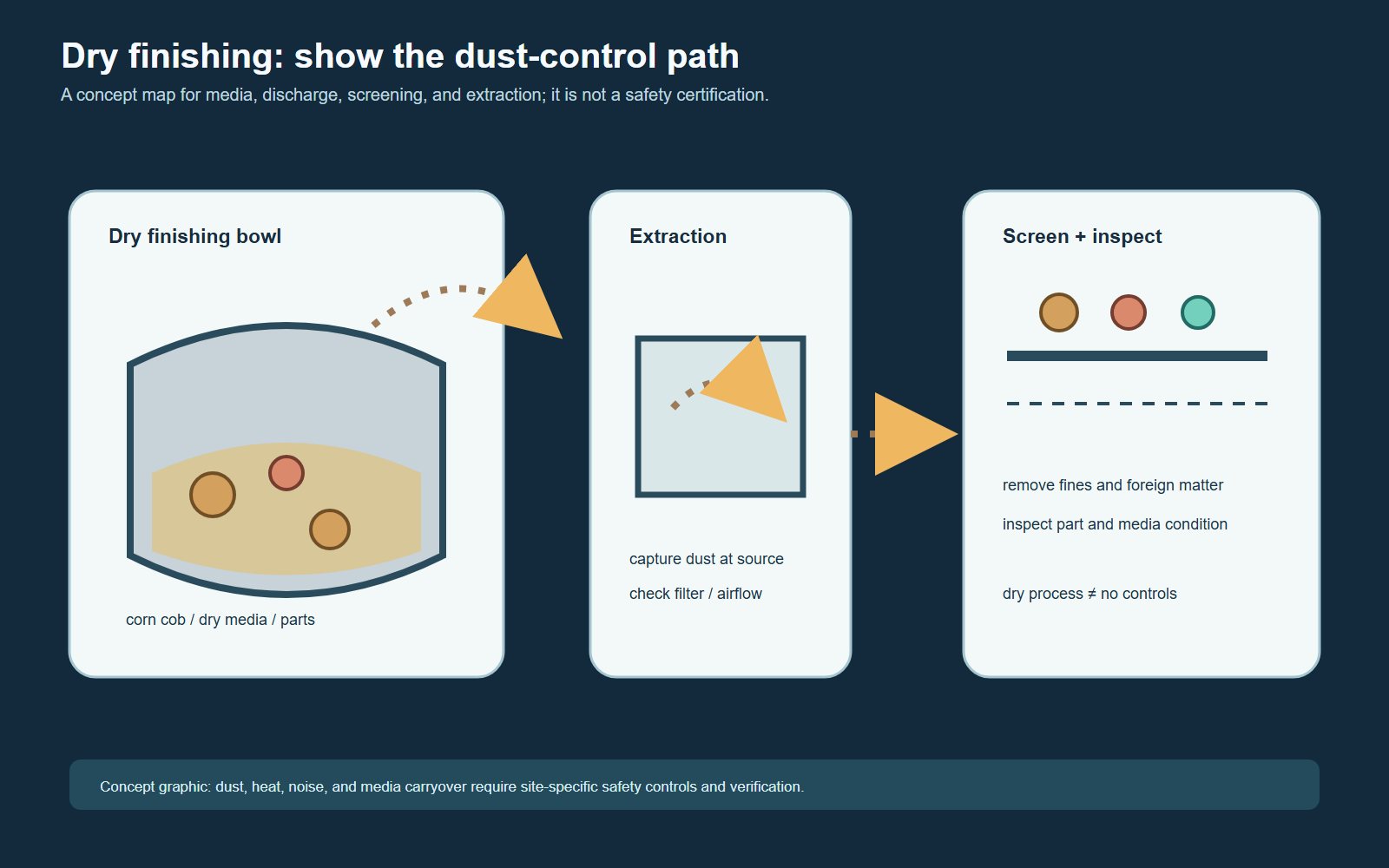
Local exhaust ventilation is intended to capture an airborne contaminant close to where it is generated. HSE guidance emphasizes that effective LEV depends on suitable hood design, ducts, air movers, air cleaning, commissioning, checking and maintenance. A generic fan or an unverified connection is not evidence of adequate control.
Evaluate LEV when dust becomes airborne during normal work, escapes at transfer points, accumulates around the process, or when the material risk assessment calls for engineering control. Capture design must match the source and task without disrupting safe machine operation or spreading contamination to another area.
A written cleaning routine should identify areas, methods, frequency, responsibility and evidence of completion. Include floors and accessible surfaces as well as beams, cable trays, machine frames, enclosure edges and collection points where dust can settle. Cleaning frequency should be based on observed accumulation and the assessed hazard, not an invented universal interval.
Avoid cleaning methods that disperse settled dust into the air. OSHA guidance specifically warns against using compressed air to clear dust surfaces where combustible-dust concerns exist. Select vacuuming or other methods only after confirming that the equipment and method are suitable for the identified material and hazard.
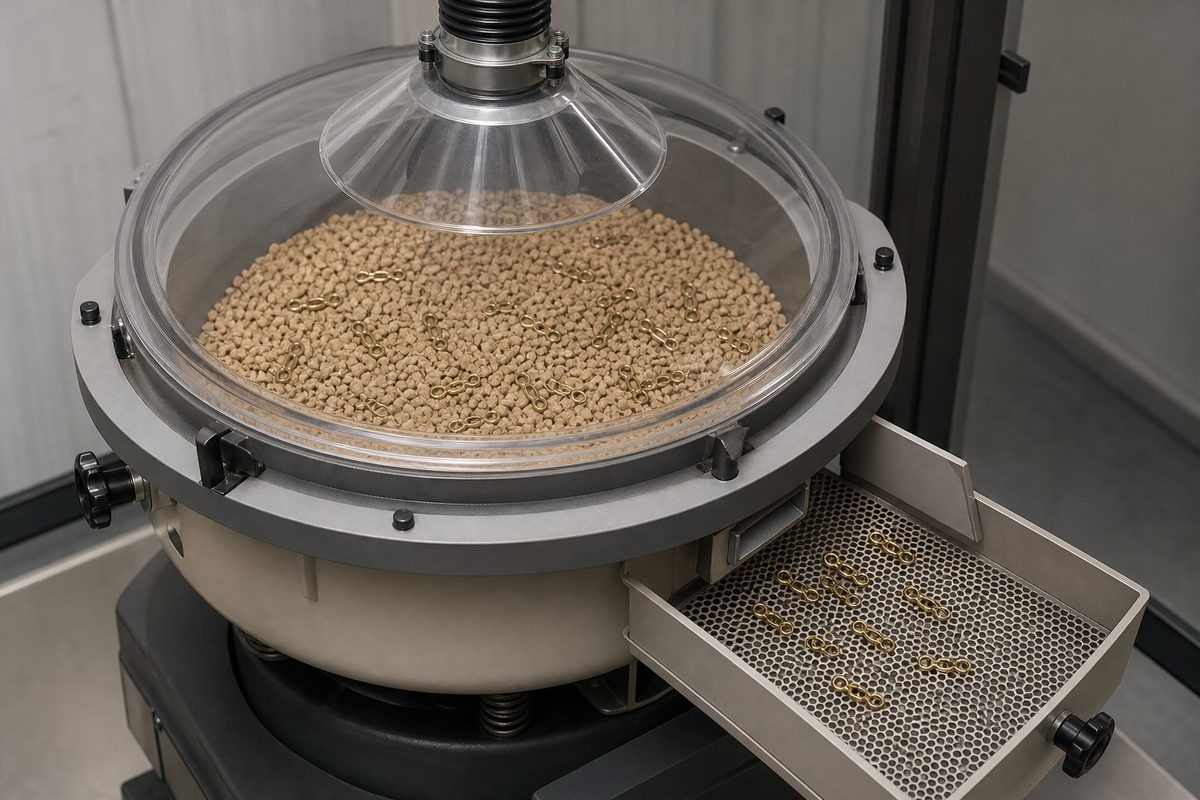
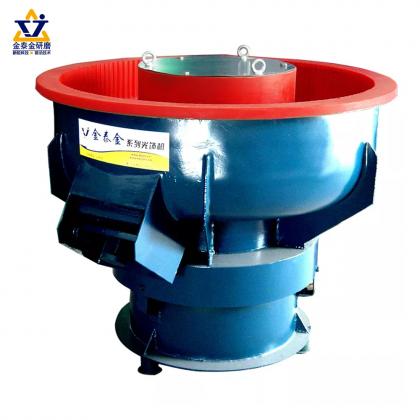
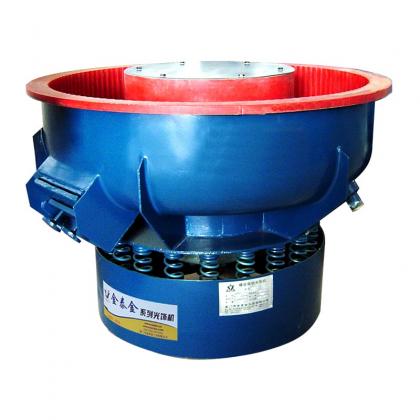
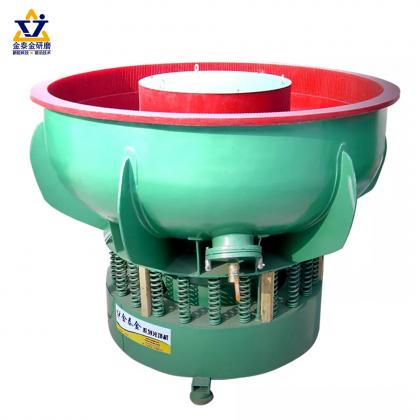
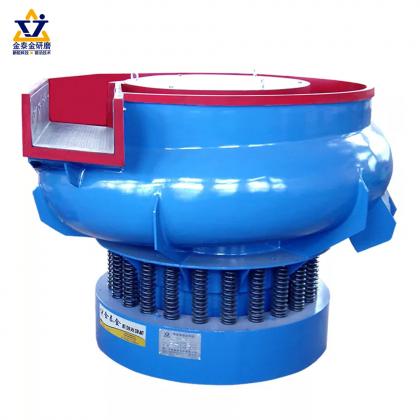
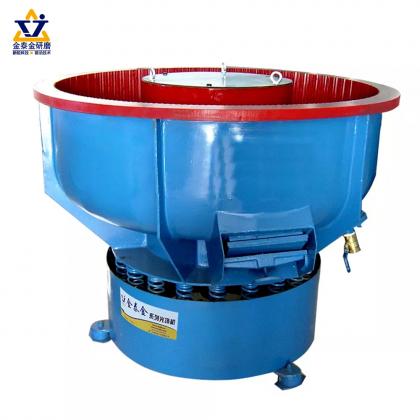
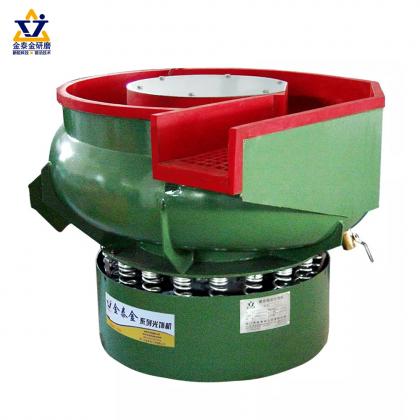
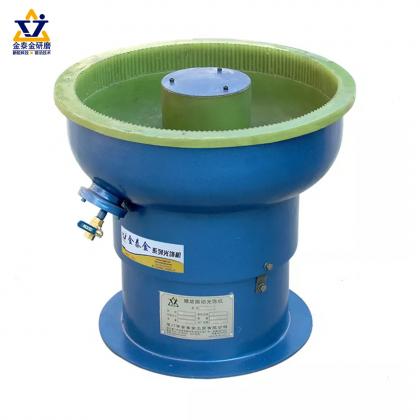
For machine-family context, review the dry polishing machine range. For process qualification, use the mass-finishing sample trial record and keep safety-control evidence separate from surface-finish results.
No. Dust properties, source location, process rate, enclosure, handling steps and local requirements differ. The control must be designed and verified for the actual installation.
No. Fine airborne particles may not always be obvious, and deposits can collect in concealed or elevated locations. Use material information, workplace observations and competent assessment.
Not automatically. Housekeeping controls settled material; properly designed extraction aims to capture airborne contaminant near its source. The risk assessment should determine the required combination.
Send SurfacePolish the workpiece material, coating or residue, dry media, batch handling route, available safety data and photos of loading, discharge and screening points. We can organize the machine and process questions for a supplier trial; workplace dust-hazard and extraction design decisions must remain with qualified safety and ventilation specialists.
Safety references: OSHA combustible dust guidance and HSE HSG258 local exhaust ventilation guidance.
Email : info@surface-polish.com


 IPv6 network supported


 +86-592-2381506